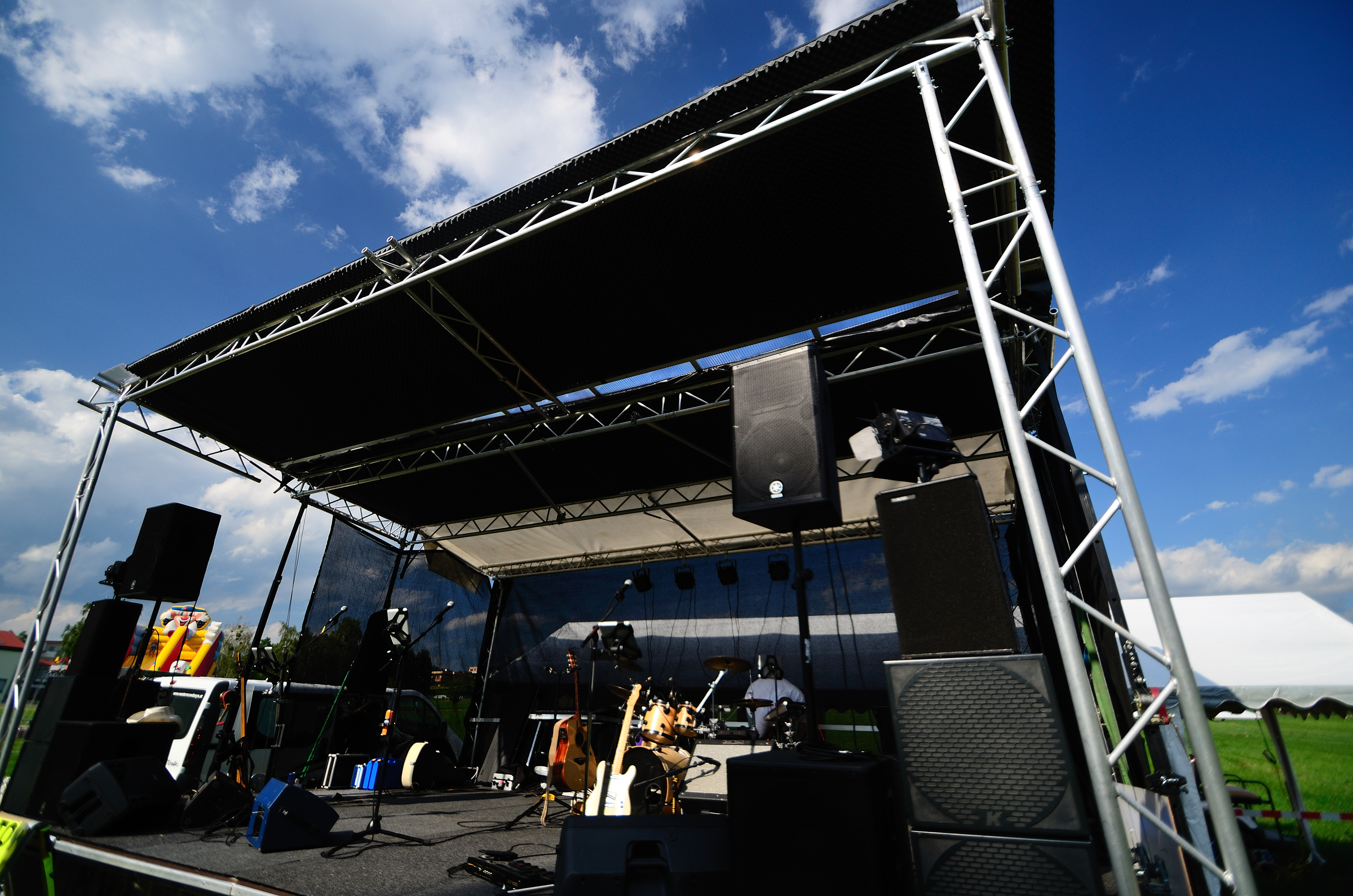
Small venue sound reinforcement has been transformed by technological advances that pack professional-grade capability into remarkably compact packages. The traditional compromise between portability and performance has largely disappeared as new designs achieve both. Understanding current compact PA technology helps venue operators, bands, and production companies choose systems matching their specific requirements.
Column Array Evolution
Column array speakers have become the dominant format for compact PA systems, and current designs represent significant advances over earlier generations. These tall, narrow enclosures use multiple small drivers arranged vertically to create controlled vertical dispersion while maintaining wide horizontal coverage. This pattern focuses sound on audience areas while reducing energy directed at ceilings and floors where it creates problematic reflections.
Current column arrays achieve frequency response extending below 50Hz from surprisingly small enclosures, reducing or eliminating the need for separate subwoofers in many applications. Digital signal processing built into these systems applies sophisticated equalization, limiting, and crossover functions automatically. Users select venue presets or application modes, and the system configures itself appropriately.
Integrated Subwoofer Designs
Many compact PA systems now incorporate subwoofers into the main unit or use combined designs where the subwoofer serves as the stand for column speakers. This integration simplifies setup dramatically: connect power, place the system, and start mixing. The subwoofer provides bass extension while raising the column element to appropriate height for the room.
Digital crossover networks divide frequencies precisely between subwoofer and column elements. Time alignment compensates for physical driver positions, ensuring coherent summation where frequency ranges overlap. These sophisticated functions happen automatically, requiring no technical knowledge from users while delivering results that once required extensive system engineering.
Built-In Mixing and DSP
Integrated mixing capabilities have expanded beyond basic channel combining. Current compact systems include multi-channel digital mixers with effects processing, feedback suppression, and wireless control. A single smartphone or tablet controls the complete system from anywhere in the venue, enabling sound checks from audience positions rather than fixed mixing locations.
Automatic feedback detection and suppression has become remarkably effective. Systems continuously analyze audio for feedback signatures and apply narrow parametric filters to suppress problem frequencies without audible impact on overall sound quality. This technology enables non-engineers to achieve stable, high-quality sound in challenging acoustic environments.
Bluetooth and Wireless Connectivity
Wireless audio streaming via Bluetooth has become standard in compact PA systems, enabling background music playback without additional cables or devices. Current implementations use aptX HD and similar codecs that maintain audio quality suitable for professional applications, a significant improvement over earlier Bluetooth versions.
Some systems incorporate wireless microphone receivers, eliminating the need for separate wireless units. Built-in receivers typically support one to four wireless channels, sufficient for many small venue applications. This integration reduces system complexity and ensures compatibility between wireless and speaker components.
Battery-Powered Options
Lithium battery technology has enabled truly cable-free PA systems that maintain professional performance. Current battery-powered compact PAs deliver full output for eight or more hours, sufficient for most events without access to electrical power. This capability opens applications in outdoor venues, remote locations, and facilities where power access is limited.
Battery systems typically include charging indicators, remaining runtime estimates, and automatic power management that extends operating time when full output isn’t needed. Quick-charge capabilities restore substantial runtime during brief breaks. Understanding actual battery performance under real operating conditions helps plan for extended events without power infrastructure.
Cardioid Bass Configurations
Low-frequency energy traditionally spreads in all directions, creating problems with stage wash, rear wall reflections, and neighbor complaints in close-proximity venues. Cardioid subwoofer configurations cancel bass behind the speaker while maintaining full output toward audiences. What was once a technique requiring careful setup of multiple subwoofers now comes built into single-unit compact systems.
These directional bass systems dramatically improve clarity by reducing low-frequency energy on stage where it muddies instrument sounds and overwhelms monitor systems. Small venues particularly benefit because the distances involved mean rear-radiated bass would otherwise interfere with front-directed sound.
Network Integration and Control
Professional network control protocols have migrated to compact systems, enabling integration with larger production environments when needed. Systems supporting Dante or similar protocols can receive audio from network infrastructure or feed recordings to network-connected devices. This connectivity allows compact systems to serve as components in larger networked production setups.
Remote monitoring and diagnostics through cloud-connected systems let manufacturers and dealers provide support without physical presence. System status, operating history, and diagnostic information are accessible remotely, enabling proactive maintenance and faster problem resolution. Rental companies benefit from visibility into fleet status across multiple installations.
Weight and Portability Advances
Class D amplification, neodymium drivers, and composite enclosure materials have reduced system weights dramatically. Complete compact PA systems weighing under 50 pounds total deliver output levels previously requiring hundreds of pounds of equipment. Single-person setup is practical for systems serving rooms holding 200 or more people.
Integrated handles, wheels, and protective covers streamline transport and storage. Thoughtful accessory designs include cable management, microphone storage, and protective sleeves. These details matter for systems that move frequently between venues and must remain in good condition through repeated handling.
Sound Quality Improvements
Perhaps most significantly, compact PA systems now achieve sound quality that rivals much larger systems. Extended bandwidth, flat frequency response, and low distortion have become achievable in small packages. The processed, boxy sound that characterized earlier compact systems has given way to open, natural reproduction suitable for critical listening applications.
Room correction features analyze venue acoustics and apply compensation automatically. These systems can measure response at multiple positions and optimize for even coverage throughout the space. Results approach what experienced engineers achieve with measurement systems and parametric equalizers, but happen automatically in minutes.
Selecting the Right Compact System
Match system capabilities to actual requirements. Consider typical audience sizes, music versus speech applications, portability requirements, and technical operator availability. Features enabling non-technical users add value for applications without dedicated sound engineers but may be unnecessary for professional touring applications.
Demonstration before purchase or rental reveals real-world performance that specifications cannot capture. Listen to systems with content similar to intended applications. Evaluate not just sound quality but also setup simplicity, control interface usability, and overall workflow. The best compact PA system is one that sounds good and works reliably in hands of actual users.
