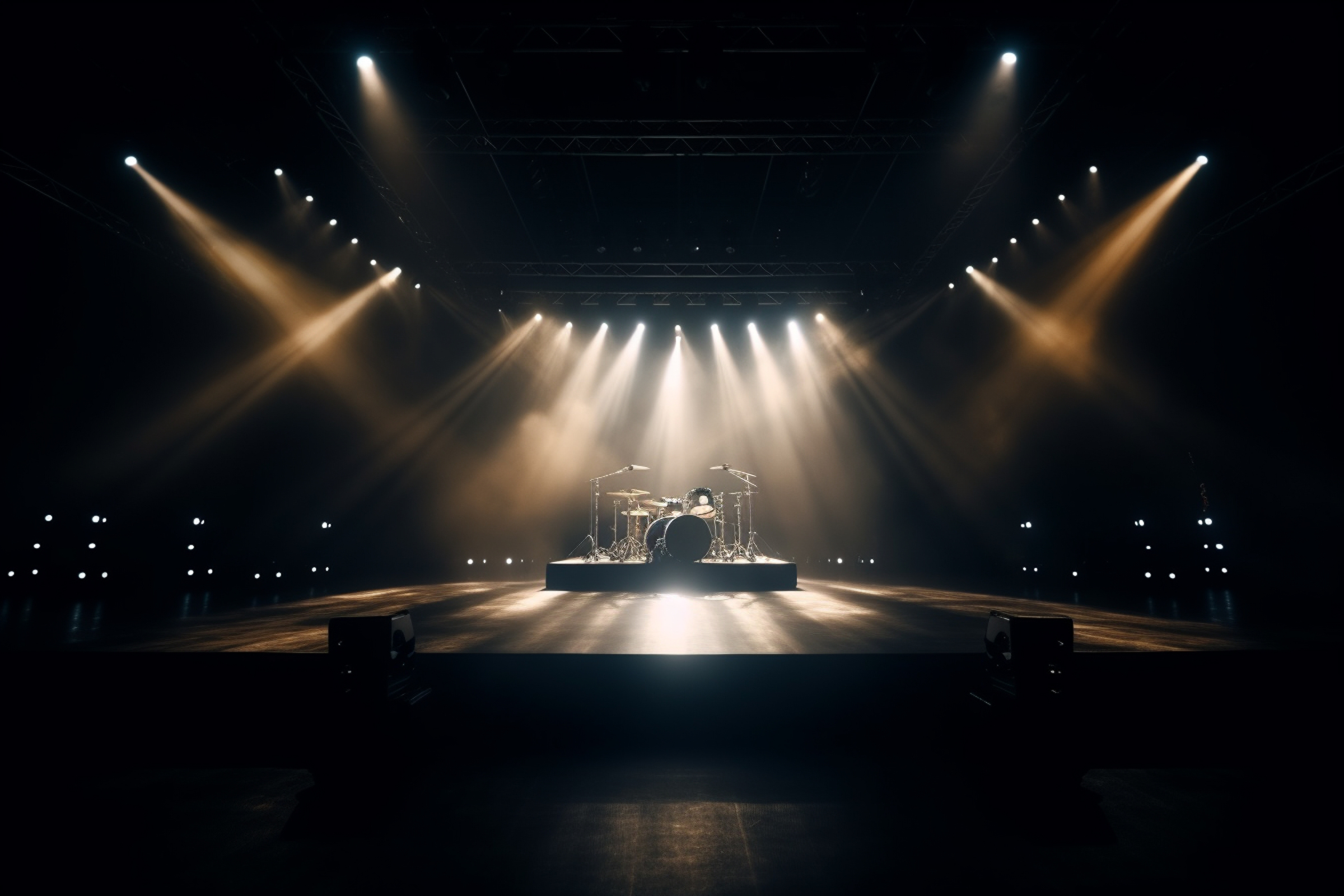
The awards ceremony transformed when the lighting designer focused a single spotlight on each presenter’s entrance, creating dramatic reveals that photographs captured beautifully. Meanwhile, the keynote speaker commanded attention without competition because carefully placed accent lighting drew eyes to the stage rather than the room’s architectural distractions. Using light strategically to highlight stage elements represents one of the most powerful yet underutilized tools in event production—creating visual hierarchy that guides audience attention precisely where organizers intend.
The Psychology of Light and Attention
Human vision naturally gravitates toward brightness contrast. In a room with uniform illumination, eyes wander randomly; when one area is noticeably brighter, attention focuses there automatically. This biological tendency enables lighting designers to control audience perception without explicit direction. A presenter standing in a pool of warm light against a darker background commands attention; the same presenter under flat ambient lighting competes with everything else in the room for visual priority.
Color temperature further influences attention and perception. Warm tones (around 3200K) feel inviting and draw focus; cool tones (5600K and higher) create alertness but can feel clinical. Mixing temperatures strategically—warm key light on presenters against cooler environmental lighting—creates natural visual separation. The ETC ColorSource and Chauvet Colorado series fixtures enable precise color temperature control that supports these psychological principles.
Fixture Selection for Accent Applications
Ellipsoidal fixtures (often called Lekos or Source Fours after the dominant ETC Source Four product) provide the precise beam control accent lighting requires. Adjustable shutters shape the light pool, eliminating spill onto adjacent areas. Interchangeable lens tubes alter beam spread for different throw distances. These fixtures have served theatrical applications for decades precisely because they enable the precise light placement that creates visual drama.
Moving head fixtures add dynamic capability to accent lighting. The Martin MAC Encore, Robe Esprite, and Claypaky Axcor Profile can reposition between cues, serving different stage positions without physical fixture relocation. This flexibility proves invaluable for events with multiple presenters or changing stage configurations. A single moving head can follow action across the stage, maintaining the accent illumination that static fixtures provide only for fixed positions.
Practical Application Techniques
Product highlighting on stage demonstrates accent lighting’s commercial application. A reveal moment gains impact when the product sits in darkness, then a fixture snaps on to illuminate it dramatically while surroundings remain dim. The GrandMA3 lighting console’s precise timing control enables these reveals with frame-accurate cue execution. Companies launching products routinely use accent lighting to create photograph-worthy moments that marketing teams capture for continued use.
Architectural accent lighting defines stage boundaries and creates depth without requiring scenic construction. Washing back walls with color establishes visual backdrop; highlighting columns or other venue features integrates the space into the stage design. This approach proves particularly effective in non-traditional venues where architectural elements can enhance rather than compete with production design. The Chauvet Colorado Solo batten and similar linear fixtures provide efficient architectural washing while maintaining precise color control.
Accent lighting transforms functional illumination into design tool. Events that merely light stages adequately miss the opportunity to direct attention, create drama, and enhance the visual hierarchy that makes productions feel professional and purposeful. The investment in proper accent lighting—appropriate fixtures, thoughtful design, and skilled operation—pays dividends in audience engagement and production quality that flat, uniform lighting cannot achieve.
