The Billboard That Moves: LED as Brand Infrastructure
The corporate event industry crossed a threshold when it stopped thinking about LED walls as audiovisual equipment and started thinking about them as brand infrastructure. This conceptual shift—from “screen on stage” to “brand environment”—transformed the brief for production companies, the budget allocation from marketing teams, and the creative expectations of executives who had seen what was possible at competitor events.
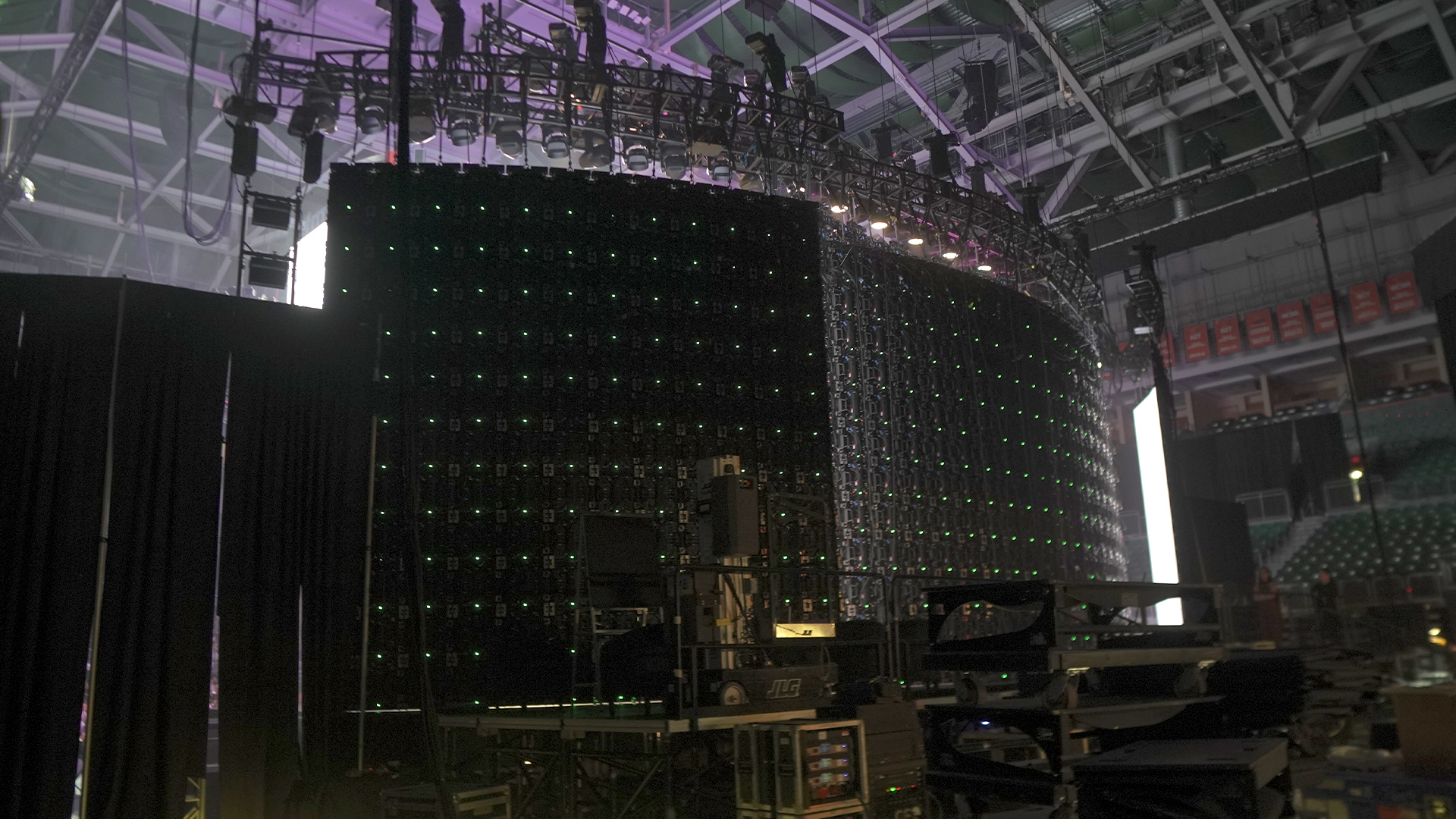
A LED wall as branding tool serves multiple commercial functions simultaneously: it is the visual identity system for the event, the content distribution platform for the brand narrative, the photography and broadcast backdrop for the media coverage the event generates, and the architectural statement that communicates the organization’s production ambition to every attendee. When a KPMG or McKinsey global conference deploys a 20-metre curved LED wall with their brand identity integrated into generative content, they are not making an audiovisual decision—they are making a brand positioning decision.
Design Language: From Generic to Ownable
The distinction between a LED wall that serves as backdrop and one that serves as brand asset lies entirely in the intentionality of its design. A generic LED wall displaying the company logo on a blue field is a backdrop. A curved, multi-planar LED installation displaying custom-generated content that expresses the brand’s specific visual identity through motion design, color language, and typographic system is a brand asset—one that builds the audience’s emotional relationship with the organization through every moment they spend in its presence.
The transition from generic to ownable LED visual identity requires collaboration between the brand team and the content designer that begins in the pre-production phase, well before any technical specification is finalized. The brand’s design guidelines—color system, typographic standards, photographic style, motion principles—must inform the content brief that the production designer develops, creating a creative framework that ensures the LED content feels unmistakably the brand’s own rather than the production company’s stock creative.
Notch software has become the tool of choice for brand-informed generative content because its visual programming interface allows content designers without deep coding experience to build generative systems that faithfully express brand design principles. A generative Notch system built to a brand’s color specifications will produce output that feels brand-consistent regardless of the specific motion state—a reliability that pre-rendered content cannot achieve when the brand’s live event schedule requires content adaptation for different event themes within the same visual system.
Photography and Broadcast Considerations
A LED wall that serves as brand backdrop must be optimized not only for the live audience but for the photographic and broadcast record of the event—the images and videos that will reach audiences orders of magnitude larger than those physically present. This optimization requires understanding how the LED wall appears in camera frames under the specific lighting conditions of the event environment.
The color temperature relationship between the LED wall content and the stage lighting is the primary photographic consideration. A wall displaying cool-blue brand content in an environment lit to 3200K (warm light) creates an immediate color clash in photography that neither the photographer nor the brand director will approve—yet this combination appears frequently in events where the content team and the lighting team have not coordinated their approach to color temperature.
The professional solution is a pre-production camera test session where the production photographer or broadcast director of photography tests the LED wall content against the planned lighting state using the actual cameras and lenses planned for the event. This test reveals color temperature mismatches, brightness relationships between wall and stage that cause exposure problems, and content motion speed issues that create motion blur problems in photography—all issues best resolved during pre-production rather than on the day of the event.
Case Study: Product Launch as Brand Experience
A global automotive brand’s European product launch event—simultaneously broadcast to dealership networks across 40 countries—deployed a 30-metre wide curved LED wall using ROE Visual CB5 panels, driven by a Disguise gx 2c media server and custom-developed content built in Notch. The content system incorporated the brand’s signature typography, motion language derived from the design language of the product being launched, and real-time data integration that displayed live social media sentiment from the brand’s launch campaign as abstract visual data in the LED content.
The broadcast integration required specific modifications to the LED wall’s content brightness and color temperature during the broadcast segments—reducing peak brightness from 1,200 nits to 800 nits to prevent camera over-exposure, and adjusting the content’s color temperature from the 6500K that looked optimal to the live audience to 5600K that rendered correctly on broadcast cameras calibrated for daylight.
These dual-audience optimization requirements—live and broadcast—are now standard considerations in corporate LED wall production briefs. The production companies that build the expertise to satisfy both audiences simultaneously occupy a premium position in the market, delivering work that generates both the live experience impact the client wants and the broadcast content quality the brand’s marketing team needs to justify the production investment.
