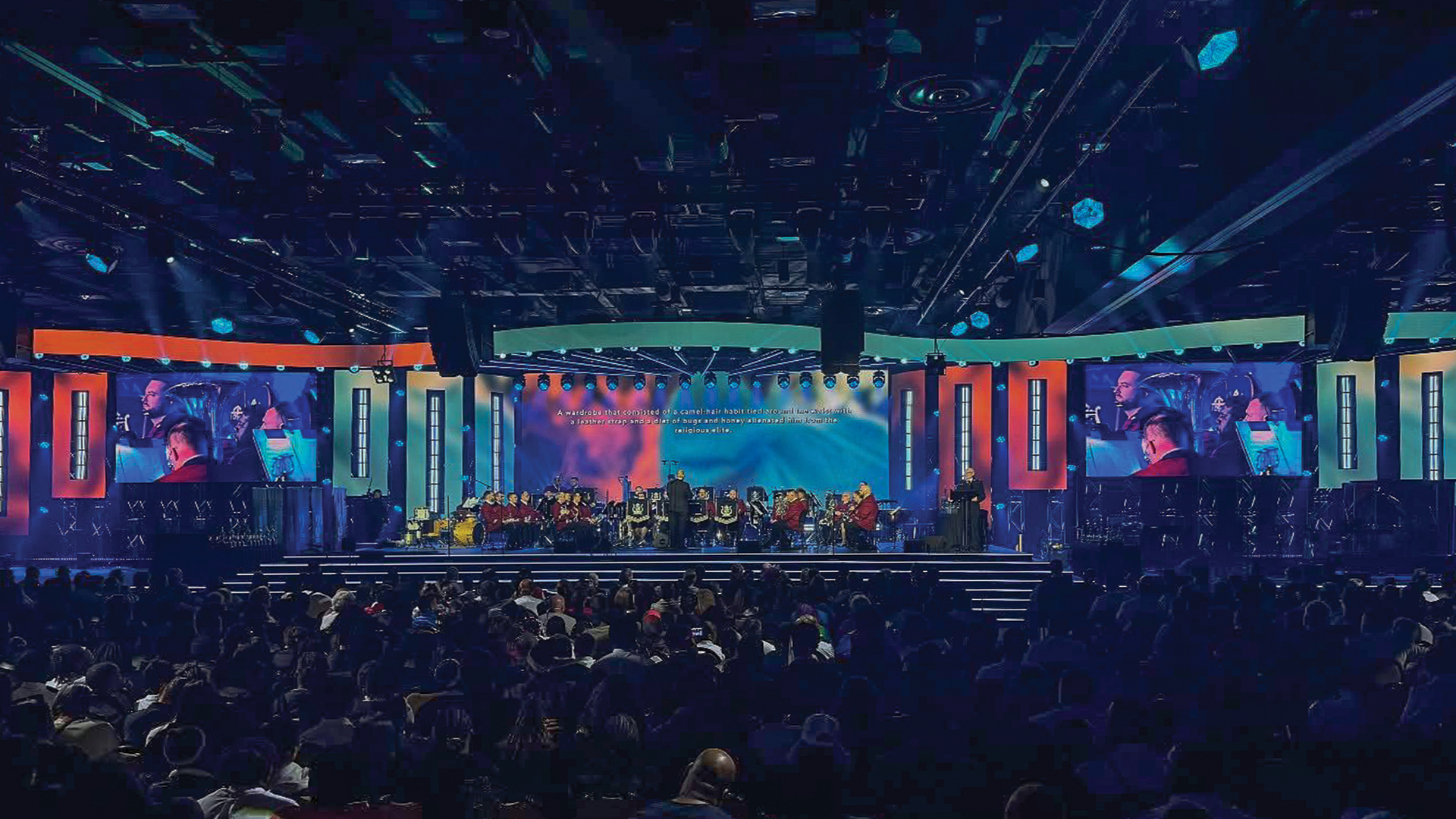
The concept of guided movement through visual stimulation has fascinated architects and designers for centuries, but modern LED column displays have transformed this idea into something genuinely spectacular. When attendees walk through a corridor lined with synchronized video content, they become participants in a narrative rather than passive observers finding their way to the next session room.
The Psychology Behind Visual Pathways
Human beings naturally follow light and movement. This instinct, deeply embedded in our neural wiring, makes LED column installations remarkably effective at directing foot traffic. Research from the Illuminating Engineering Society suggests that dynamic lighting elements capture attention 340% more effectively than static signage, creating what designers call ‘visual magnetism.’
Production companies like PRG and 4Wall Entertainment have refined the art of wayfinding through LED columns. Their installations at major conventions demonstrate how sequential lighting patterns can move thousands of people smoothly through complex venue layouts without overwhelming traditional signage.
Technical Specifications That Matter
The pixel pitch of LED columns determines how close viewers can stand while still perceiving smooth imagery. For walkway applications, a 2.5mm to 3.9mm pixel pitch typically strikes the right balance between resolution and budget. Products from ROE Visual and Absen have become industry standards for these installations.
Brightness levels require careful consideration. Indoor walkways usually need columns running between 800 and 1,200 nits, while outdoor applications demand significantly higher output. The Novastar MCTRL4K controller has become a favorite among technicians for managing multiple columns simultaneously while maintaining perfect synchronization.
Structural Considerations
Column installations must account for structural integrity and cable management. Rigging systems from James Thomas Engineering provide modular solutions that accommodate both freestanding columns and suspended configurations. Weight distribution becomes critical when designing pathways longer than 50 feet, particularly in venues with load-bearing limitations.
Content Strategies for Directional Flow
Creating content that subtly guides movement requires understanding visual momentum. Motion graphics that flow in the desired direction of travel create unconscious cues that attendees follow naturally. Software platforms like Resolume Arena and disguise (d3) allow designers to program sequential content across multiple columns with millisecond precision.
- Horizontal sweeping effects suggest lateral movement and work well for linear corridors
- Pulsing brightness patterns draw attention to specific areas or transition points
- Color temperature shifts can indicate different zones within an event space
- Brand-aligned animations reinforce sponsor messaging while maintaining wayfinding functionality
Historical Context and Evolution
The use of vertical elements for spatial definition traces back to ancient civilizations, from Egyptian temple columns to Roman atriums. The modern adaptation began in earnest during the 1980s when Las Vegas casinos pioneered neon-lit walkways to guide patrons between gaming areas. The transition from neon and incandescent sources to LED technology in the early 2000s dramatically expanded possibilities.
The 2012 London Olympics marked a watershed moment when Crystal CG created massive LED column installations throughout the Olympic Park. These structures demonstrated that video content could transform navigation into entertainment, influencing corporate event production for years afterward.
Integration with Event Management Systems
Modern LED column installations often integrate with event management platforms like Cvent or Bizzabo to display real-time information. Session start times, room availability, and directional cues update automatically based on schedule changes. This dynamic capability requires robust API connections and reliable network infrastructure throughout the installation.
Production teams increasingly specify NDI (Network Device Interface) compatible equipment for these integrations. Developed by NewTek, this protocol enables video content to travel over standard ethernet connections, simplifying installation and reducing cable complexity in large-scale deployments.
Budget Considerations and ROI
LED column installations represent significant investment, with rental costs typically ranging from $500 to $2,500 per column per day depending on specifications. However, the impact on attendee experience and the reduction in printed signage requirements often justify the expense. Events measuring attendee satisfaction scores consistently report higher ratings when dynamic wayfinding elements are employed.
Organizations like the Event Marketing Institute have documented cases where strategic LED column placement reduced average time-to-session by 23%, improving overall event flow and attendee engagement with programming content.
Future Developments
The integration of spatial computing and augmented reality triggers with physical LED installations represents the next frontier. Companies like Disguise are developing systems that combine column displays with AR wayfinding apps, creating layered navigation experiences that adapt to individual attendee preferences.
Transparent LED technology from manufacturers like LG and Samsung is also changing the game. These panels allow columns to display video content while maintaining visibility through the structure, opening possibilities for installations that don’t obstruct sightlines or natural light in atrium spaces.
As LED technology continues advancing in resolution and cost-effectiveness, the applications for immersive walking path experiences will only expand. Production professionals who master these techniques position themselves at the forefront of experiential design, creating memorable journeys that begin the moment attendees enter a venue.
