There is a very specific kind of expertise that separates the touring AV technician from the install specialist — and it distills to one relentless question: will this work every night in a different room? Building a travel-ready AV package for a touring production is not about stripping a system to its minimums. It is about engineering a rig that is compact, reliable, adaptable, and serviceable thousands of miles from the nearest rental house or manufacturer support center. The stakes are entirely different from a single-city build.
From the club touring circuits of the 1980s — where acts like R.E.M. and The Cure first proved that consistent production values were achievable on tight budgets across diverse venues — to today’s globally routed corporate road shows and theatrical touring productions, the fundamentals of a well-engineered tour package have never been more technically demanding or commercially important. The margin for error on the road is zero.
Start With the Venue Matrix, Not the Gear List
Before a single piece of equipment is specified, the venue matrix must drive every decision. A tour routing through 500-seat performing arts centers, 2,000-capacity clubs, and outdoor festival stages in the same run requires a system that scales across all three without requiring fundamental reconfiguration at each stop. This is the central design constraint, and it is solved by intelligent selection of modular, scalable components — not by building for the best venue and hoping for the worst.
Experienced touring system engineers design against worst-case venue assumptions: smallest usable stage footprint, worst power quality, lowest ceiling height, longest cable runs, worst loading dock access. A package designed to operate in the worst stop on the tour will perform elegantly everywhere else. Anything designed around best-case assumptions will create a crisis the moment it encounters reality.
Audio: The Touring System’s Backbone
The touring audio package lives or dies by line array flexibility. Compact systems from L-Acoustics KARA II, d&b audiotechnik Y-Series, and Adamson IS-Series have become workhorses of the mid-size touring market because they pack efficiently, deploy quickly, and cover a wide range of venue acoustics without requiring full reconfiguration at every stop. These aren’t compromises — they’re purpose-engineered touring tools.
Digital consoles have been universally standard on professional touring riders since the early 2010s. The Avid VENUE S6L and DiGiCo SD Range lead the top tier. The Yamaha CL5 and Allen & Heath dLive S7000 hold strong mid-market positions. The operational advantage of a show-file-based console workflow on tour is profound: load the show file at each new venue and the console recalls every gain setting, EQ curve, effect routing, and output assignment from the previous night instantly. Consistency across 60 cities becomes systematic rather than heroic.
Always carry your own digital stage box and snake infrastructure. Systems like the DiGiCo SD-Rack or Dante-native stage boxes provide clean, consistent splits regardless of the quality of the venue’s existing infrastructure. Relying on house audio infrastructure is a reliable source of latency surprises, grounding issues, and format incompatibilities that kill your morning setup schedule.
Lighting: The Weight-Per-Watt Optimization
Touring lighting is fundamentally a weight-per-watt optimization problem. Every kilogram of lighting equipment on a truck represents cost multiplied across every date on the run, and the maturation of high-output LED moving lights has transformed what’s achievable in a compact touring rig. Fixtures like the Robe BMFL Spot, Martin MAC Viper Performance, and Claypaky Sharpy Plus deliver output that previously required much heavier and more power-hungry discharge lamp fixtures.
Console choice is critical. The grandMA3 compact XT is arguably the most common touring lighting console in professional production — it combines full grandMA3 software capability with a road-worthy form factor and the universal show file compatibility that makes it a safe bet on any rider. The ETC Eos Ti and ChamSys MagicQ MQ500M hold strong touring followings in theatrical and mid-market applications. The show file portability of all these platforms means your programmer’s entire show travels on a thumb drive and survives any hardware swap.
Video on Tour: Pixels Per Pound
When video is part of the touring package, pixel pitch selection becomes a logistics calculation as much as an aesthetic one. Fine-pitch panels below 2.9mm pixel pitch look exceptional but carry weight and fragility penalties that compound over a heavy touring schedule. Most touring video systems find their balance at 3.9mm to 5.9mm pitch for rigs that need to survive 40-plus-city runs without module casualties.
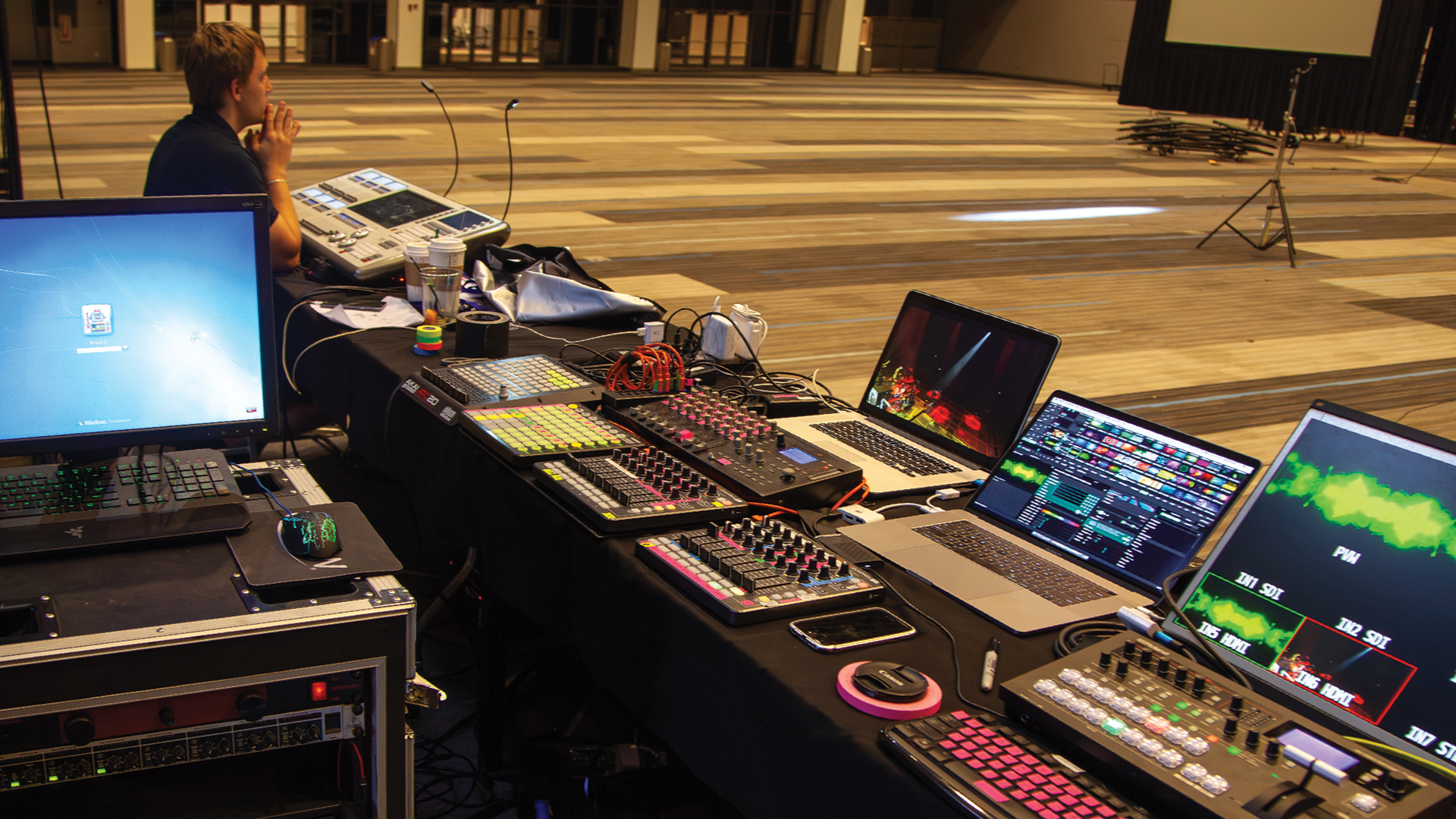
Media servers are the creative engine of the touring video system. The disguise gx 2c and Green Hippo Hippotizer Karst+ are compact enough for a single road case while delivering the processing horsepower for multi-output generative content and real-time effects. For smaller tours, Resolume Avenue running on a purpose-built Windows workstation is a cost-effective solution that many touring video directors have refined into a genuinely high-performance system over years of touring experience.
Power: The Foundation Everything Else Depends On
Power quality on a touring production is wildly inconsistent across venue types. Buildings from different eras have different grounding philosophies, different available amperage, and radically different distances from service panels to stage positions. A touring package that doesn’t include its own power distribution and protection system is gambling with every piece of gear in the rig every night.
Touring-grade power distro systems from Lex Products, Socapex, and Motion Laboratories offer rackmount and portable configurations with built-in circuit breakers, Edison and PowerCon outputs, and voltage monitoring. A UPS (Uninterruptible Power Supply) in the console and media server chain — specifically protecting against the brown-outs and momentary drops common in older performance venues — is a standard inclusion on any professional touring package, not a budget upgrade.
Road Case Strategy: Build to the Deployment, Not the Gear
The default instinct is to build road cases around individual pieces of equipment. The touring instinct is to build cases around deployment sequences. A single case containing a stage box, its power supply, and its cables deploys faster and suffers less damage than three separate cases containing those items independently. Custom fabricators like Anvil Cases, Calzone Cases, and Star Cases build to any internal configuration — the design investment is a one-time cost that pays dividends across every tour leg.
Foam lining matters more than most people budget for. Polyethylene closed-cell foam protects against vibration damage over thousands of road miles in ways that open-cell foam simply cannot maintain over time. The initial investment in purpose-built custom cases pays for itself in avoided repair bills within the first tour leg for most productions. This is a well-established calculation in touring — the companies that cut corners on cases pay for it through the entire run.
Pre-Tour Tech Rehearsal Is Non-Negotiable
No touring package should hit the road without a dedicated tech rehearsal period in a controlled environment. This is where the real system integration work happens: confirming all components communicate correctly, show files recall as expected, power consumption stays within budget, and the load-in and load-out workflow meets the time targets in the production schedule.
The tech rehearsal is also when the touring crew learns the rig as a team. Familiarity — knowing exactly where each case goes, which cable runs where, what to check first when something misbehaves — is a learned skill that only comes through deliberate repetition. The more rigorously you invest in the rehearsal period, the more professionally the show executes on night one of the actual tour. And on night 47, when the crew is tired and the schedule is compressed, that embedded familiarity is the margin that holds the show together.
