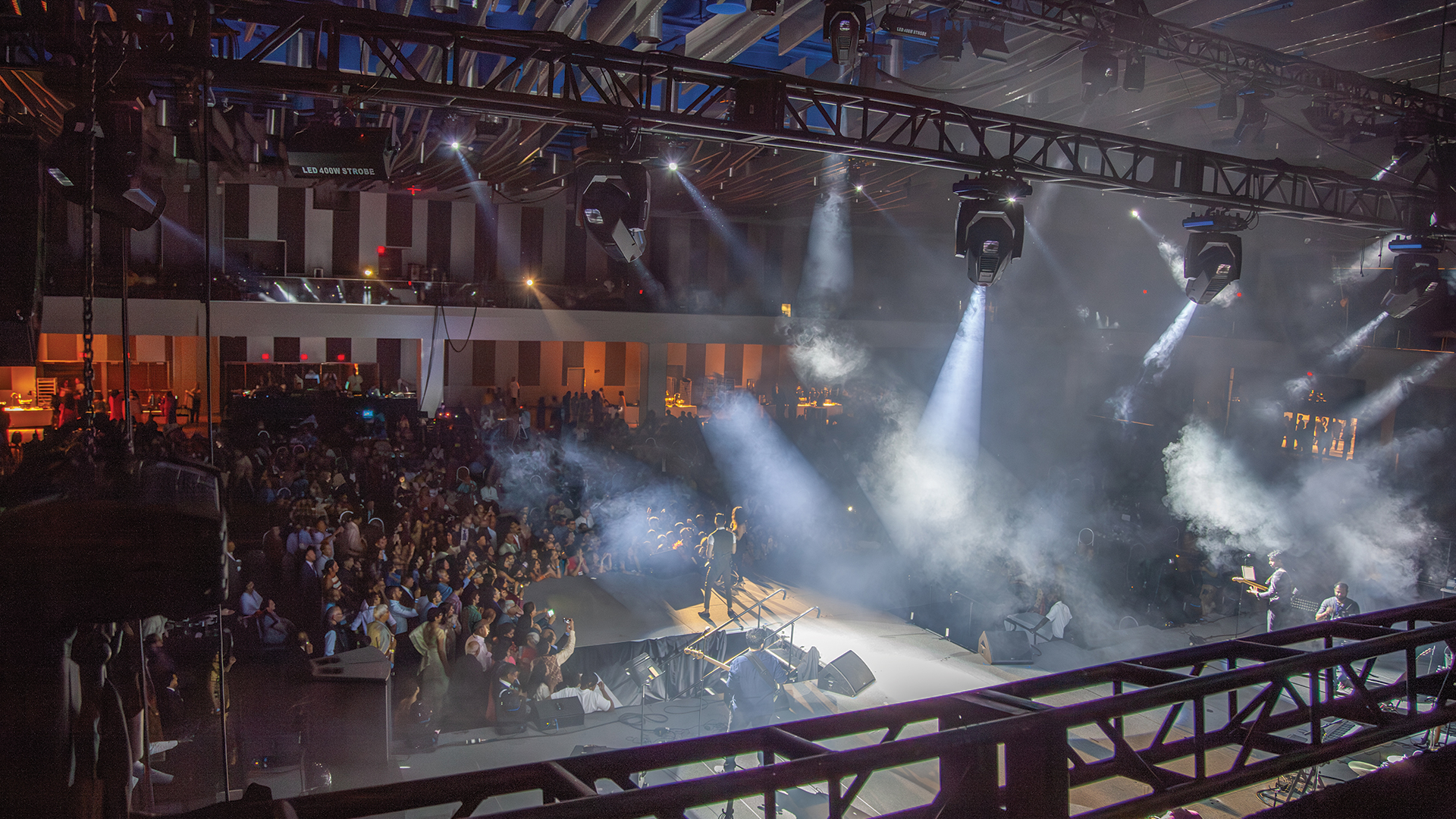
When Your Aluminum Structure Becomes the Unplanned Star of the Show
The Truss That Wanted to Be Seen
Every lighting designer has witnessed the moment when carefully designed sight lines collide with truss placement realities. The perfectly rendered WYSIWYG visualization showed clean beam angles and invisible structure, but the actual venue reveals that your Tyler GT Truss now occupies prime real estate directly between the headliner and the VIP section paying premium prices for ‘unobstructed views.’
The 2016 MTV Video Music Awards production team learned this lesson spectacularly when a downstage truss position meant to hold Martin MAC Viper Profiles ended up creating a shadow line across three celebrity presenters’ faces. The production riggers had followed the plot perfectly—the plot simply hadn’t accounted for the stage extension added during rehearsals.
The Physics of Photogenic Aluminum
Truss structures possess an unfortunate property: specular reflection. That brushed aluminum finish on your Global Truss F34 will catch any moving head fixture that sweeps past and broadcast that reflection directly into camera lenses. The Robe MegaPointe throwing effects across the stage doesn’t care about your truss positions—it illuminates everything in its path with democratic indifference.
Professional truss manufacturers including Tomcat Global and Applied Electronics LITEC now offer powder-coated black finishes specifically to reduce this problem. The flat black coating absorbs rather than reflects, transforming your structural elements from attention-seeking scene stealers into properly invisible support systems.
Historical Moments When Truss Became the Star
The history of entertainment rigging includes numerous instances where structural elements unexpectedly dominated visual presentations. The 1985 Live Aid concert at Wembley Stadium featured a truss grid so prominent in broadcast coverage that some viewers assumed it was an intentional design element rather than a necessity of hanging 800 PAR 64 fixtures without permanent venue infrastructure.
The development of box truss design in the 1970s by companies like James Thomas Engineering was revolutionary for load capacity but created the visual problem we still navigate today. Before box truss, productions used scaffolding that was openly industrial; after box truss, we expected structures to disappear while somehow supporting increasingly ambitious lighting rigs.
The Camera Angle Conspiracy
Broadcast productions wage constant war between camera operators and rigging designers. The steadicam positions that seemed perfectly clear during tech rehearsals reveal truss intrusions once actual cameras roll. That prolyte H30V truss supporting your Clay Paky Sharpy Plus fixtures now appears in every wide shot like an unwanted guest who refuses to leave the frame.
Modern productions address this through extensive previz sessions using software like Vectorworks Spotlight with integrated camera views. The MA Lighting grandMA2 3D visualizer can show exactly what each camera angle will capture, including every structural element. The problem is getting production meetings to actually review these visualizations before truck loading deadlines make changes impossible.
Practical Solutions for Invisible Structure
The first commandment of truss visibility management: if the audience can see it, dress it. Truss covers from manufacturers like ShowTex and Georgia Stage transform raw aluminum into finished scenic elements. The stretch fabric sleeves slide over standard 12-inch box truss and can be printed with custom graphics, making your structure part of the visual design rather than an intrusion upon it.
Alternatively, embrace the industrial aesthetic deliberately. The concert production aesthetic popularized by bands like Nine Inch Nails turned visible truss into a design statement. If you cannot hide the rigging infrastructure, incorporate it into the visual concept. Wrap it with Astera Titan Tubes, line it with LED tape, and transform structural necessity into visual feature.
The Trim Height Temptation
Every production manager knows the conversation: ‘Can we fly it higher?’ The truss trim height battle involves venue ceiling limits, chain hoist capacity, and the physics of lighting throw distances. Raising your midstage truss eliminates sight-line problems but changes every focus angle on your ETC Source Four fixtures and potentially exceeds your CM Lodestar safe working loads.
The Entertainment Services and Technology Association (ESTA) technical standards specify maximum truss spans between support points based on load and deflection limits. That beautiful 60-foot clear span you designed requires substantially heavier truss—often 20.5-inch heavy-duty box truss rather than standard 12-inch—which creates the exact visibility problem you were trying to solve.
The Truss Configuration That Blocks Everything
Certain truss configurations possess remarkable talent for visual obstruction. The goalpost configuration—vertical towers with horizontal top beam—creates a frame that either enhances or destroys sight lines depending on placement accuracy measured in inches. The Milos M290 Quick Truss can form beautiful geometric structures, but those same structures can bisect your stage picture when positioned without camera awareness.
The circular truss popular for corporate events and club installations presents unique challenges. A Tyler GT circular truss floating above a presentation stage looks elegant from below but creates geometric nightmares for camera operators trying to shoot through or around it. The curvature catches light from multiple angles, guaranteeing that somewhere in your venue, someone is seeing more truss than talent.
Pre-Production Planning That Prevents Drama
The solution to truss visibility issues lies in comprehensive pre-production planning. Start with accurate venue dimensions—not the outdated CAD file from the venue website, but actual measurements including any temporary staging or seating risers. The Leica DISTO laser measurers used by professional production designers pay for themselves the first time they prevent a ‘truss doesn’t fit’ crisis.
Model every camera position in your 3D visualization software. The WYSIWYG Perform suite allows you to place virtual cameras and generate views showing exactly what each will capture. If your front truss appears in the crane shot visualization, it will appear in the actual crane shot—adjust now, not during rehearsals when your rigging crew has already moved to the next call.
Emergency Truss Visibility Solutions
When you arrive at load-in and discover your truss will dominate every shot, emergency options exist. Black Duvetyn fabric draped over offending structural elements provides immediate visual reduction. The Rosco Velour used for masking is specifically designed to absorb rather than reflect light, transforming gleaming aluminum into shadow.
For broadcast situations, coordinate with your video director on shot selection that minimizes truss appearance. Tight shots, strategic camera angles, and creative use of depth of field can reduce structural visibility without physical modification. The truss didn’t steal the limelight—you simply gave it the opportunity. Control your shots, control your story, and remember that every piece of rigging infrastructure visible on screen represents a pre-production decision that could have been made differently.
