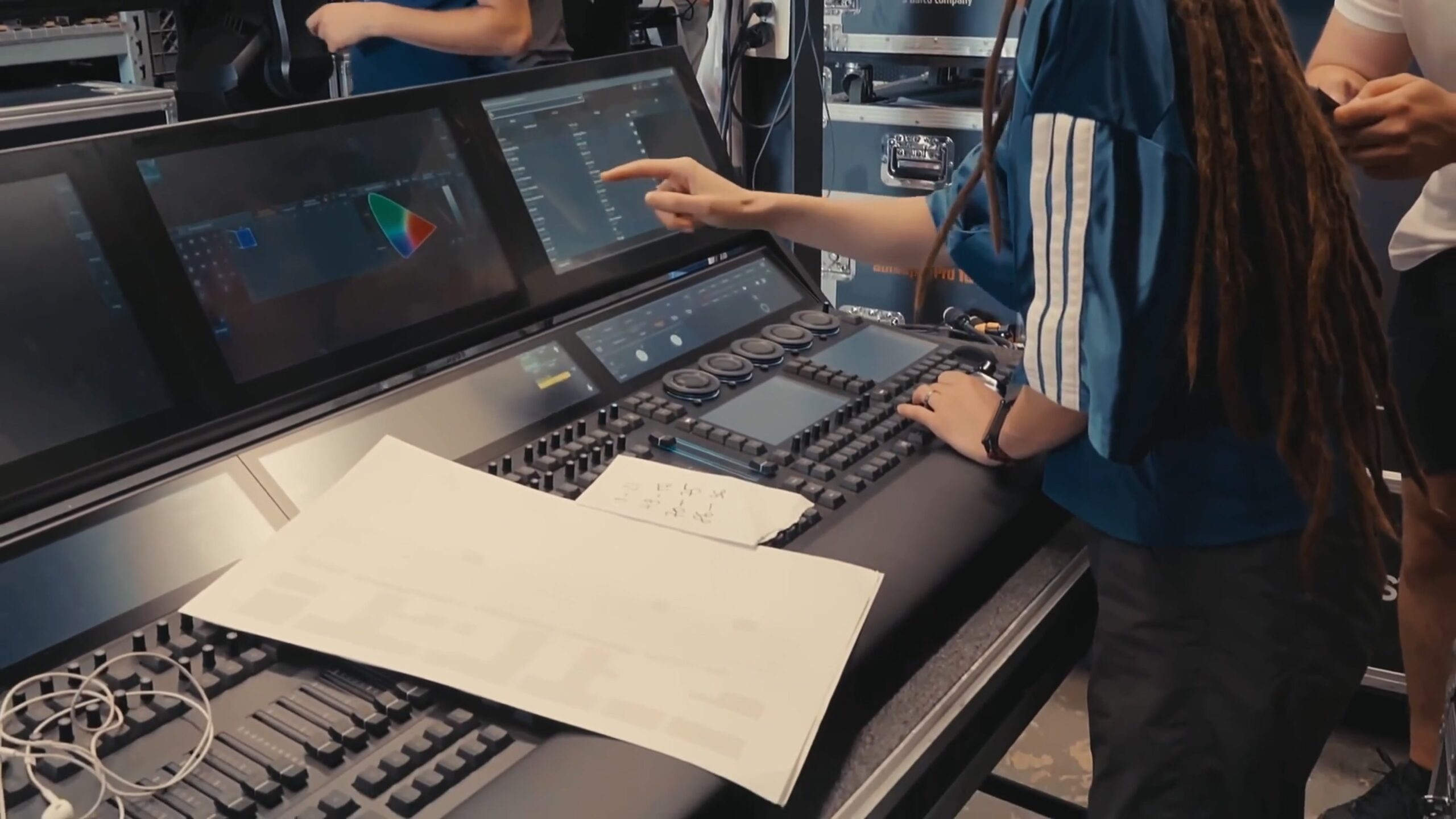
The moment a lighting designer walks into a major stadium touring show’s production office and opens a grandMA3 session file, they are looking at a universe of controlled variables that would paralyze most professional software environments. A touring lighting rig of 5,000+ fixtures — each with 20 to 50 individual parameters including pan, tilt, color mixing, gobos, prisms, zoom, focus, strobe, and intensity — represents somewhere between 100,000 and 250,000 independent control values that must be orchestrated, in real time, in perfect synchronization with music, video, pyrotechnics, and the physical performance happening on stage. MA Lighting’s grandMA3 software is the platform that has made this scale of coordination not merely possible but reliable enough to execute night after night across a world tour.
The History Behind the Platform
MA Lighting Technology GmbH, headquartered in Waldbüttelbrunn, Germany, released the first grandMA console in 2001, introducing a paradigm that would fundamentally reshape professional lighting control. Before grandMA, the dominant systems — Wholehog II from Flying Pig Systems and Avolites Pearl — managed fixtures as individual units within relatively flat data structures. grandMA introduced the concept of deeply nested, object-oriented programming: executors that could contain entire cue sequences, effects generators that could apply dynamic patterns to any selection of fixtures simultaneously, and a command line interface that allowed experienced operators to access any function in the system without navigating menu trees. The transition from grandMA2 to grandMA3 in 2018 represented the most significant software architecture change in the platform’s history, moving from a proprietary operating system to a Linux-based environment with full network transparency and an entirely redesigned user interface.
How 5,000 Fixtures Actually Get Managed
The grandMA3 system’s approach to managing large fixture counts begins with its network architecture. A single grandMA3 full-size console processes up to 250 universes of DMX (127,500 individual parameters) natively, with additional capacity available through networked grandMA3 NPU (Node Processing Units) that can expand the system’s universe count without adding additional consoles. On a major touring production — Taylor Swift’s Eras Tour, for example, which deployed a grandMA3 system managing over 6,000 fixtures at peak rig count — multiple NPUs are networked together through a dedicated gigabit Ethernet infrastructure, each handling a defined zone of the rig. The console itself functions as the programming and operational interface while the NPUs carry the computational load of DMX universe management, ensuring that console performance remains consistent regardless of how many fixtures are active simultaneously.
Programming Methodology: Cuelists, Macros, and Effects
The grandMA3 programming methodology for a 5,000-fixture rig relies on several architectural disciplines that experienced lighting directors establish before the first programming hour begins. Selective programming — writing cues that contain only the parameters actively changed at that cue point, leaving all other parameters to their previous state — keeps show files manageable and allows seamless modification during tour without cascading updates across hundreds of interdependent cues. The MAgic effects generator processes mathematical wave functions — sine, cosine, random, and custom user-defined shapes — across selectable groups of fixtures, creating the chasing, sweeping, and pulsing effects that define modern touring shows without requiring individual cue-by-cue animation. A single effect line in grandMA3 can simultaneously animate pan, tilt, color, and strobe across all 5,000 fixtures in a rig, synchronized to BPM tap tempo fed from the band’s click track.
Visualizers and Pre-Programming: WYSIWYG and Depence
No designer programs a 5,000-fixture show live on the first day of production. The weeks of pre-production that precede the physical rig build are spent in visualization software — primarily CAST Software’s WYSIWYG or Syncronorm’s Depence3 — that provides a real-time three-dimensional model of the stage environment and rig, connected directly to the grandMA3 via Art-Net or sACN output. Designers can program complete shows in visualization before any fixture is physically hung, arriving at the production rehearsal with a substantial cue library already built. The translation from virtual pre-production to real-world accuracy depends critically on fixture library accuracy — MA Lighting’s MA 3D fixture library contains data for over 50,000 fixture types, and the community-maintained GDTF (General Device Type Format) database increasingly supplements it with manufacturer-supplied profiles for newly released fixtures.
Multi-Console Redundancy: When Everything Must Work
On a touring show of the scale that demands 5,000-fixture management, single-console operation is not acceptable. Redundant console configurations — in which a second grandMA3 full-size or grandMA3 light console mirrors the primary console’s session data in real time — are standard practice on any production where technical failure means a financial and reputational catastrophe. MA Lighting’s session sharing system, introduced in grandMA3 software version 1.5, allows up to 25 consoles to share a single synchronized session simultaneously — a capability that supports both redundancy and the multi-console configurations used on productions where separate operators manage specific rig zones (audience lighting, stage wash, video, and effects each having their own operator on the largest shows). The system’s CITP (Controller Interface Transport Protocol) integration allows Resolume and disguise media servers to feed fixture-mapping data directly into the lighting console session.
The Human Interface: Programming 5,000 Fixtures Under Pressure
The technology infrastructure is only part of the story. The programmers who operate grandMA3 at the highest level — veterans like Bob Barnhart, Benny Kirkham, and Patrick Woodroffe’s programming teams — developed their command-line fluency through years of programming sessions that often extend past midnight in empty arenas. The grandMA3 command line allows a single keystroke combination to select a complex fixture group, apply a color effect, adjust timing, and store the result — operations that would take a novice operator three menu-navigation sequences and 45 seconds. This efficiency matters immensely during a production rehearsal where a director is calling changes from the show caller position, a tour manager is watching the clock, and the lighting team has 20 minutes to reprogram a sequence that previously took three hours to build.
The Platform’s Market Position and Future Direction
MA Lighting grandMA3 currently holds the dominant position in the top tier of the global touring and events lighting control market — a position that Robe Lighting, Avolites, and ETC EOS each compete to challenge in different market segments. The platform’s combination of programming depth, network scalability, and the global network of trained operators who know its syntax makes it self-reinforcing: productions specify grandMA3 because they can hire experienced operators, and experienced operators train on grandMA3 because productions specify it. The release of grandMA3 software version 2.0 in 2023, introducing granular pixel mapping integration and enhanced 3D pre-visualization tools natively within the console interface, extended the platform’s capabilities while preserving the command-line architecture that its user base depends on.
AV Production Insights | Professional Series
