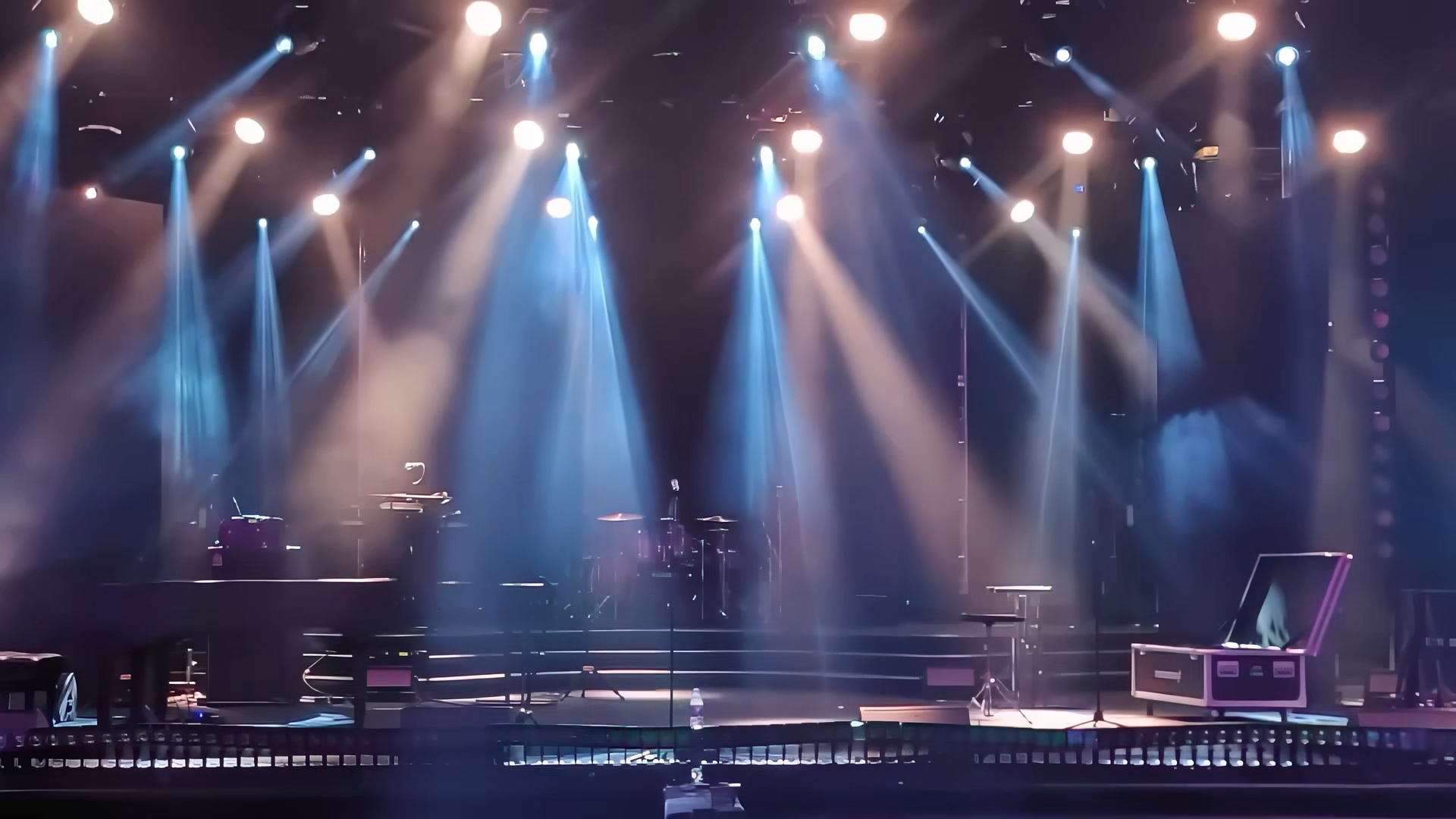
The cable. For seven decades, the cable was the defining constraint of live event lighting production. Every intelligent fixture needed a DMX data line, a power feed, and — in colder climates — potentially a heating circuit. The weight, the labor cost, the rigging complexity, and the creative limitations imposed by the physical requirement to route wire to every lighting position shaped the art form in ways so fundamental that most designers had stopped questioning them. Then Astera LED Technology released the AX1 Pixel Tube in 2014 and began dismantling every assumption the industry had built around the concept of wired control.
The Technology Behind Wireless Freedom
Astera’s wireless lighting fixtures operate on a proprietary radio frequency protocol — designated as AsteraApp DMX over RF — that transmits control data in the 2.4 GHz spectrum with addressing and encryption sufficient to manage up to 4,096 discrete fixtures simultaneously within a single AsteraApp wireless network. The fixtures themselves carry lithium polymer battery packs with operational runtimes that range from 9 hours in the AX1 PixelTube to over 12 hours in the Titan Tube — a runtime calculated at moderate output levels that real-world production confirms as reliable across show days that routinely run 8 to 10 hours. The AsteraApp control interface — available for iOS and Android as well as desktop platforms — allows full DMX parameter control including color mixing, strobe, dimming, and pixel-mapping without a single physical cable connecting controller to fixture.
Titan Tubes and AX5 Orbs: The Touring Standard
Two Astera fixtures have defined the platform’s touring dominance. The Titan Tube — an RGBWAUV 6-in-1 color-mixing LED tube with 24 individually addressable pixels — has appeared on productions ranging from Ariana Grande’s Sweetener World Tour (where it was deployed as both handheld props and atmospheric environmental elements) to Billie Eilish’s Happier Than Ever Tour, where the fixture’s ability to function as a self-contained color variable soft-light source eliminated the need for conventional tungsten floods in specific rig positions. The AX5 Trinity — a compact, faceted sphere fixture producing tri-directional output — became ubiquitous in corporate event design after its debut on the 2019 Apple Worldwide Developers Conference main stage, where its cable-free placement flexibility allowed placement in positions that would have been physically impossible with conventional fixtures.
The 1,000-Show Milestone: What It Actually Means
Astera’s claim of deployment on over 1,000 touring productions is not a marketing abstraction — it reflects a fundamental shift in how production designers and lighting directors approach fixture selection for tour riders. The milestone was reached — and publicly acknowledged in the company’s 2022 annual communications — by 2020, representing productions across touring concerts, corporate events, broadcast productions, and theatrical tours across 60+ countries. The figure matters because it documents that wireless LED battery fixture technology has crossed the reliability threshold necessary for tier-one productions to trust it on high-visibility shows where technical failure is unacceptable. Robe Lighting’s response — the PAINTE wireless battery fixture — and Elation Professional’s competing ARTISTE wireless range both entered the market acknowledging that Astera had proven the concept sufficiently to justify competitive product development.
Production Benefits: The Numbers That Drive Adoption
The production efficiency advantages of wireless battery fixtures are substantial enough to alter show economics at scale. A touring production that replaces 100 conventionally wired LED floods with Astera Titan Tubes eliminates approximately 100 DMX lines, 100 power runs, and the associated multicable infrastructure — reducing cable weight by an estimated 400-600 kg and cutting the dimmer rack requirement by 20 to 30 positions. The labor saving is more significant still: a crew call for cabling and patching 100 conventional fixtures typically runs 6 to 8 person-hours; deploying 100 Titan Tubes wirelessly runs 2 to 3 person-hours including charging verification. On a 60-date tour where load-in labor costs $3,000 to $5,000 per day, the accumulated labor savings from wireless fixture deployment routinely exceed $50,000 over a full touring cycle — a figure that covers the initial cost of owning the fixtures outright.
Broadcast and Film: Where Wireless Changes Everything
The broadcast and film production environments where Astera fixtures have made their most creatively significant impact are stages and locations where the presence of any cable — however carefully managed — compromises the visual environment. The AX1 PixelTube and Titan Tube appear regularly on Netflix and HBO productions as practical lighting elements that add texture and color to set environments without requiring the extensive cable management that would otherwise appear in frame. Cinematographers including Roger Deakins’ contemporaries in the television commercial and music video world have adopted Astera fixtures as standard tools, valued for their remote control capability — a cinematographer’s assistant operating AsteraApp on a tablet can adjust color temperature and intensity of any fixture on the set in real time without interrupting the shot in progress.
Charging Infrastructure and Tour Logistics
The operational discipline required to maintain a fleet of battery-powered fixtures on a touring show is more complex than the wireless technology itself might suggest. Astera’s charging infrastructure — the AsteraApp Charging Case system and the larger Charging Station units for Titan Tubes — requires systematic pre-show charging protocols that become embedded in the production’s daily crew schedule. A show deploying 200 Titan Tubes requires a dedicated charging call typically beginning 12 to 14 hours before showtime, with a crew member responsible for verifying battery status through the AsteraApp interface before fixtures are deployed to their show positions. Road cases specifically designed for Astera’s fixture geometry — available from Nalpak, Tuffbox, and custom fabricators — integrate charging capabilities, allowing fixtures to charge inside their transport cases during transit between venues.
The Platform’s Evolution: What 1,000 Shows Have Taught the Industry
The operational intelligence accumulated across 1,000+ touring deployments has fed back into Astera’s product development in measurable ways. The AX10 SkyPanel competitor — a large-format wireless soft-light panel introduced in 2022 — addressed the most frequently cited gap in the Astera lineup: a source suitable for key-light applications in broadcast and corporate environments without the cable infrastructure required by Arri SkyPanel and Aputure Nova alternatives. The company’s investment in Bluetooth 5.0 backup control capability in their most recent product generations ensures that productions can maintain fixture control even in environments where the 2.4 GHz RF spectrum is heavily congested — a real-world problem at events where dozens of wireless communication systems compete for the same frequency space.
AV Production Insights | Professional Series
