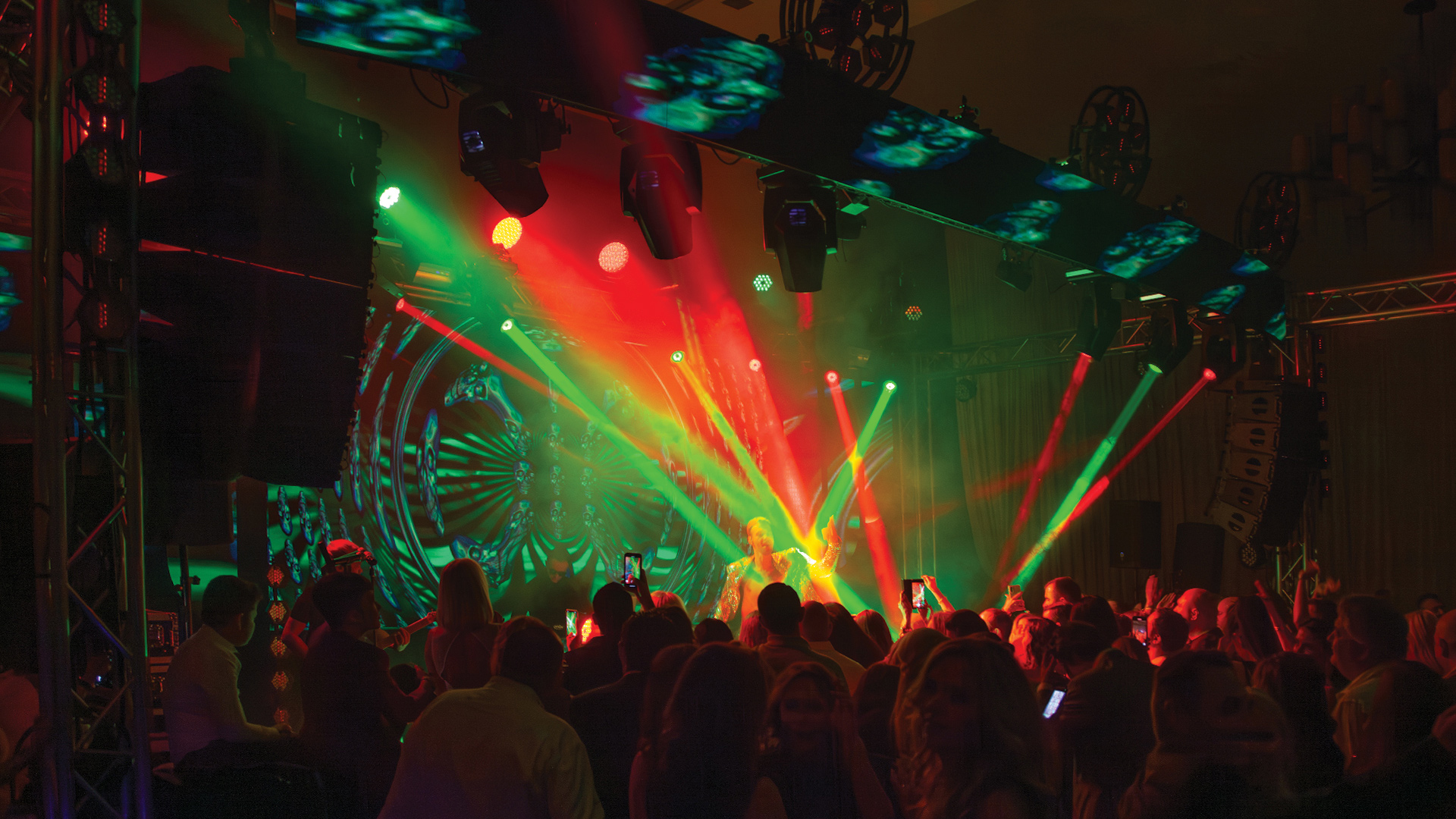
The Arena as the Proving Ground
The international arena circuit—a network of 15,000–25,000 capacity venues spanning North America, Europe, Asia, and Australia—represents the most demanding operational environment for touring audio systems. These venues are acoustically complex (typically reverberant), operationally pressured (4–6 hour load-in windows), and commercially significant (touring productions at this scale generate production fees that justify the highest-quality audio infrastructure).
JBL VTX systems have demonstrated their arena-circuit suitability across 400+ international arena deployments annually, a statistic that reflects both the system’s technical capability and the operational reliability that touring production companies require when their reputation and their clients’ performance quality depend on consistent delivery across 60+ dates per tour cycle.
Arena Acoustic Challenges and VTX Solutions
International arenas—most built primarily for sports and only secondarily adapted for concert use—present characteristic acoustic challenges that touring audio systems must address in every deployment. The high reverberation times typical of sports arenas (RT60 values of 3–5 seconds are common in unfurnished concrete structures) create an acoustic environment where intelligibility and bass definition are the primary quality challenges.
JBL VTX A12 and V25-II systems address the arena acoustic challenge through pattern control—maintaining tight vertical dispersion that directs acoustic energy toward the audience and away from the reverberant ceiling and rear wall surfaces that generate the energy returns that degrade intelligibility. The HDI waveguide technology’s consistent vertical pattern control across the crossover region (800Hz–2kHz) prevents the acoustic energy from entering the ceiling space where it would generate long-duration reverberation returns that overlap with subsequent musical transients.
The endfire subwoofer configuration that JBL recommends for arena deployments—documented in the VTX system’s application notes—minimizes the sub-bass energy that enters the arena’s structural resonance paths, directing the majority of low-frequency output toward the audience rather than the walls and floor. In practice, the endfire configuration can reduce the perceived reverberant bass energy at the FOH position by 4–6dB compared to a standard cluster configuration—a significant improvement in bass definition in environments where reverberant contamination is the primary bass quality problem.
The Load-In Efficiency Factor
Touring production economics at arena scale are dominated by labor costs, and the load-in efficiency of the audio system directly determines how much of the available production window is consumed by the audio crew versus other production departments. A system that requires 8 hours to rig, cable, and optimize in a 6-hour venue access window is not viable—it creates production conflicts that compromise the quality of every other production element.
JBL VTX’s rigging efficiency derives from the VTX Quick Release (QR) rigging frame system, which allows array assembly without dismounting individual cabinets from the transport dolly. Array elements are connected to the QR frame while horizontal, then the completed array is upended and attached to the rigging point—a workflow that typically achieves a 48-element arena array rigged and ready for cabling within 2.5–3 hours with a 6-person rigging crew.
The Crown I-Tech HD amplifier ecosystem’s network configuration recall capability contributes further load-in efficiency: venue-specific configuration files, exported from the previous engagement at the same venue or a comparable venue, can be recalled to the amplifier network within minutes of system energization—achieving the DSP configuration baseline that manual entry would require 60–90 minutes to replicate.
Signal Path Excellence: From Console to Cabinet
The JBL VTX system’s performance in international arenas depends on the complete signal path from the mixing console through the processing and amplification chain to the cabinet. The professional standard for arena-scale audio deploys AES3 digital connections from the console to the system processor, and from the processor to the amplifier inputs, avoiding the analogue conversion steps that introduce noise floor degradation in signal chains with long cable runs.
DiGiCo SD7 and Yamaha Rivage PM10 consoles—common at the headline arena production level—output AES50 or AES3 digital audio that interfaces with the Harman HiQnet network through a BSS BLU-100 or Crown DSi system processor stage box, distributing 64 channels of digital audio across the amplifier rack with a single fiber connection that eliminates the multi-channel analogue snake that consumed hours of load-in time in previous-generation audio systems.
The Crown I-Tech HD’s integrated DSP—receiving the digital signal directly from the network distribution system—applies speaker-specific filtering, crossover, and protection without requiring a separate DSP rack stage, reducing the signal chain to console, distribution network, and amplifier with the minimum number of conversion and processing stages that introduce cumulative degradation. The result is a signal path that delivers the console output to the speaker transducer with the fidelity that arena audiences—and the touring artists who judge their productions by the sound their audience hears—have come to expect.
