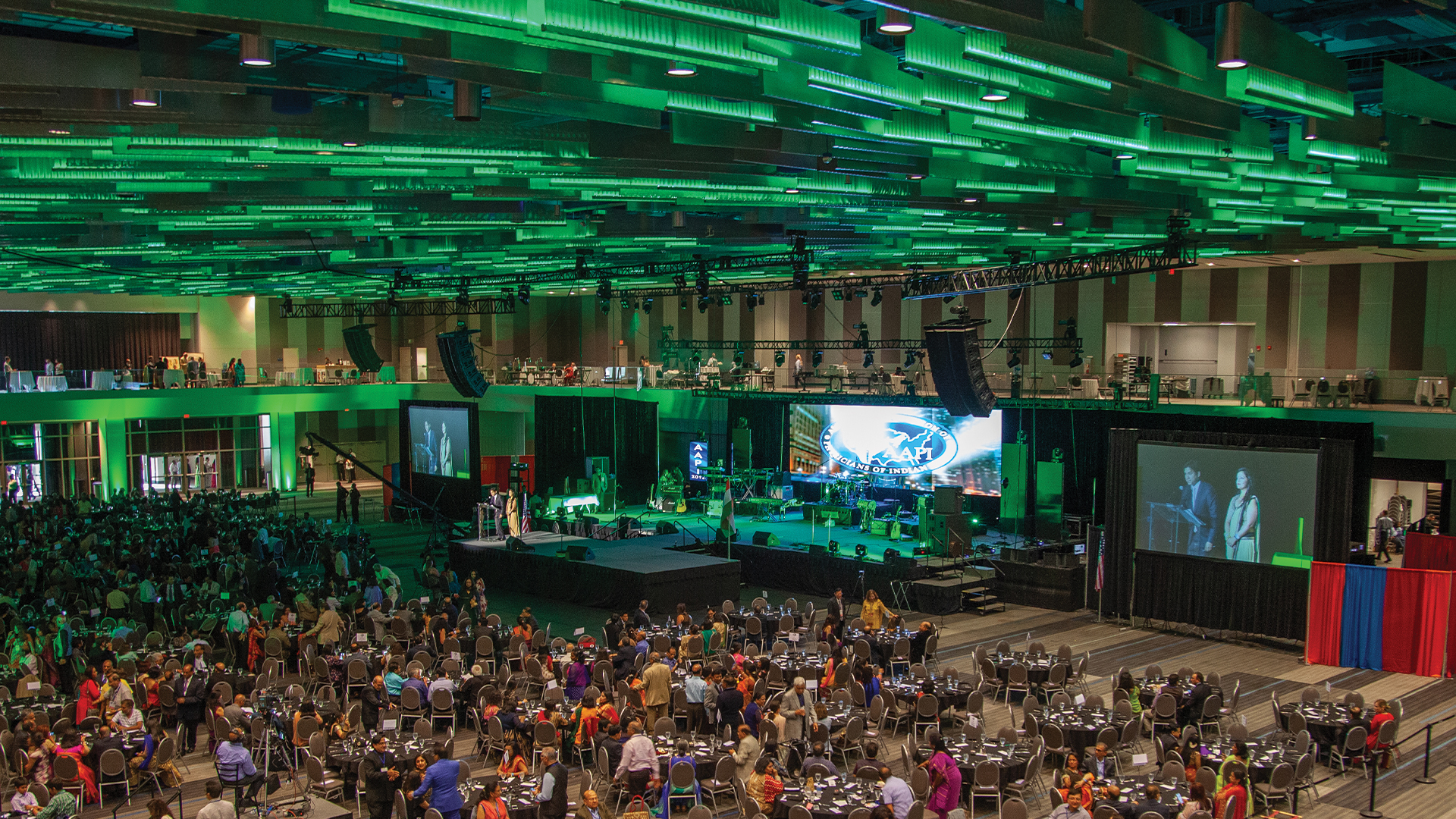
Historic theaters are the most intellectually challenging and professionally rewarding acoustic environments in live production. The Paris Opera Garnier, Vienna’s Musikverein, London’s Theatre Royal Drury Lane, and hundreds of comparable heritage venues across five continents were designed — with extraordinary acoustic craft — for unamplified performance. The orchestras, opera companies, and theatrical productions that filled these halls for generations of pre-amplification audiences did so in acoustic environments that were engineered, through geometry and material selection, to reinforce natural sound with breathtaking effectiveness. Introducing modern sound reinforcement into these environments without destroying their acoustic character — and often while preserving their physical fabric under heritage protection regulations — requires a level of system design sophistication that challenges even the most experienced audio engineers
The tension between the acoustic performance of historic venues and the needs of modern amplified production has existed since the first touring rock band played a concert in a 19th-century opera house. Early solutions were crude — speaker stacks positioned wherever space allowed, with no systematic attempt to integrate their output with the room’s natural acoustics. The development of line array technology in the 1990s, and more critically the arrival of high-accuracy acoustic simulation software in the 2000s, gave audio engineers the tools to approach historic theater acoustics as an engineering problem amenable to systematic solutions rather than an improvisation challenge.
The Reverberant Field: Enemy and Ally
The signature acoustic property of most historic theaters — the quality that makes unamplified opera so overwhelming in the Vienna State Opera or Milan’s La Scala — is their long reverberation time. Reverberation times of 1.4 to 2.2 seconds at mid-frequencies are common in major European opera houses, and while this reverberation is the acoustic ingredient that makes orchestral sound bloom and operatic voices soar, it is deeply antagonistic to amplified speech intelligibility and the tight rhythm of contemporary music production. Every transient — every consonant in a spoken word, every drum hit, every plucked note — generates a reverberant tail that overlaps with subsequent transients, progressively reducing the intelligibility of the signal as energy accumulates in the room.
The line array’s narrow vertical dispersion is the primary tool for managing this problem. A well-designed line array hang in a reverberant theater concentrates its output in the vertical plane of the audience seating, coupling energy into the absorptive audience area (where people’s clothing absorbs mid and high frequencies) while minimizing energy radiated toward the highly reflective ceiling and rear wall. This audience-directed coverage strategy reduces the reverberant field buildup that broad-dispersion point-source systems generate, achieving a direct-to-reverberant ratio sufficient for speech intelligibility in spaces where conventional systems fail. d&b audiotechnik’s Point Source systems and L-Acoustics SYVA Co compact column arrays have become favored tools for this application precisely because their narrow vertical directivity is maintained across a wide bandwidth — including the octaves where conventional speakers become increasingly omnidirectional.
Heritage Constraints: Invisible Systems in Visible Rooms
Beyond the acoustic challenge, historic theater installations impose heritage constraints that have no equivalent in contemporary venue design. Many protected buildings prohibit any permanent modification to their fabric — meaning that speaker brackets cannot be bolted to walls, cables cannot be surface-run through decorative spaces, and rigging points cannot be drilled into historic ceiling structures. Audio systems in these environments must be installed using reversible mounting systems that leave the building fabric unmodified, running cables through existing conduit pathways or newly installed wire management systems that are themselves reversible and visually unobtrusive.
The L-Acoustics ARCS Wide and ARCS Focus systems — compact curvilinear arrays designed for exactly this application — are specified frequently in historic theater contexts because their self-powered LA Mk2 amplification integrates directly into the cabinet, eliminating the need for separate amplifier racks and long cable runs through the building fabric. d&b 44S and 40D Series systems similarly combine processing and amplification to minimize infrastructure footprint. For the most constrained historic spaces, Meyer Sound’s UP-4slim and Fulcrum Acoustic’s RX Series offer centimeter-scale form factors that can be integrated into architectural details — installed in gaps between decorative moldings or within ceiling coffers — with visual impact negligible enough to satisfy the most exacting heritage preservation committee.
Case Study: The Reconstruction Challenge
A representative example of the historic theater audio challenge is found at Shakespeare’s Globe Theatre in London — a working replica of the Elizabethan open-air playhouse, constructed without a roof over the yard and designed for entirely un-amplified performance. When the Globe began hosting amplified events — rock concerts, film screenings, and amplified theatrical productions — in its secondary space and occasional main stage programmings, the sound system design required navigating heritage constraints, audience exposure to weather, and an architectural acoustic environment designed for an acoustic tradition 400 years removed from the Shure SM58 era.
The solution, developed over multiple iterations by specialist theater acoustics consultants and system integrators, combined compact L-Acoustics KIVA II line source elements at proscenium positions with delay fill systems using L-Acoustics X8 at multiple positions around the yard — all mounted on reversible brackets that attach to the venue’s timber structure without drilling. The acoustic simulation phase, conducted in EASE 4.4 and cross-referenced against CATT-Acoustic models of the timber structure’s specific absorption characteristics, predicted the coverage solution with sufficient accuracy that on-site fine-tuning required only minor level and timing adjustments rather than system repositioning.
The Hundred-Theater Track Record
Across 100+ historic theater installations, the audio engineering community has accumulated a body of knowledge about how heritage spaces respond to line array technology that has been encoded in textbooks, conference papers, and the informal knowledge-sharing culture of companies like Sennheiser Neumann, Fulcrum Acoustic, and specialist consultancies including Arup SoundLab, Wrightson Johnson Haddon Williams (WJHW), and Nagata Acoustics. The accumulated evidence is clear: with the right simulation tools, the right product selection, and an engineering team genuinely committed to serving the acoustic heritage of the building rather than simply meeting a specification target, line array technology can dramatically improve the amplified performance capability of historic theaters while preserving — and in some cases enhancing — the natural acoustic qualities that make these spaces irreplaceable.
