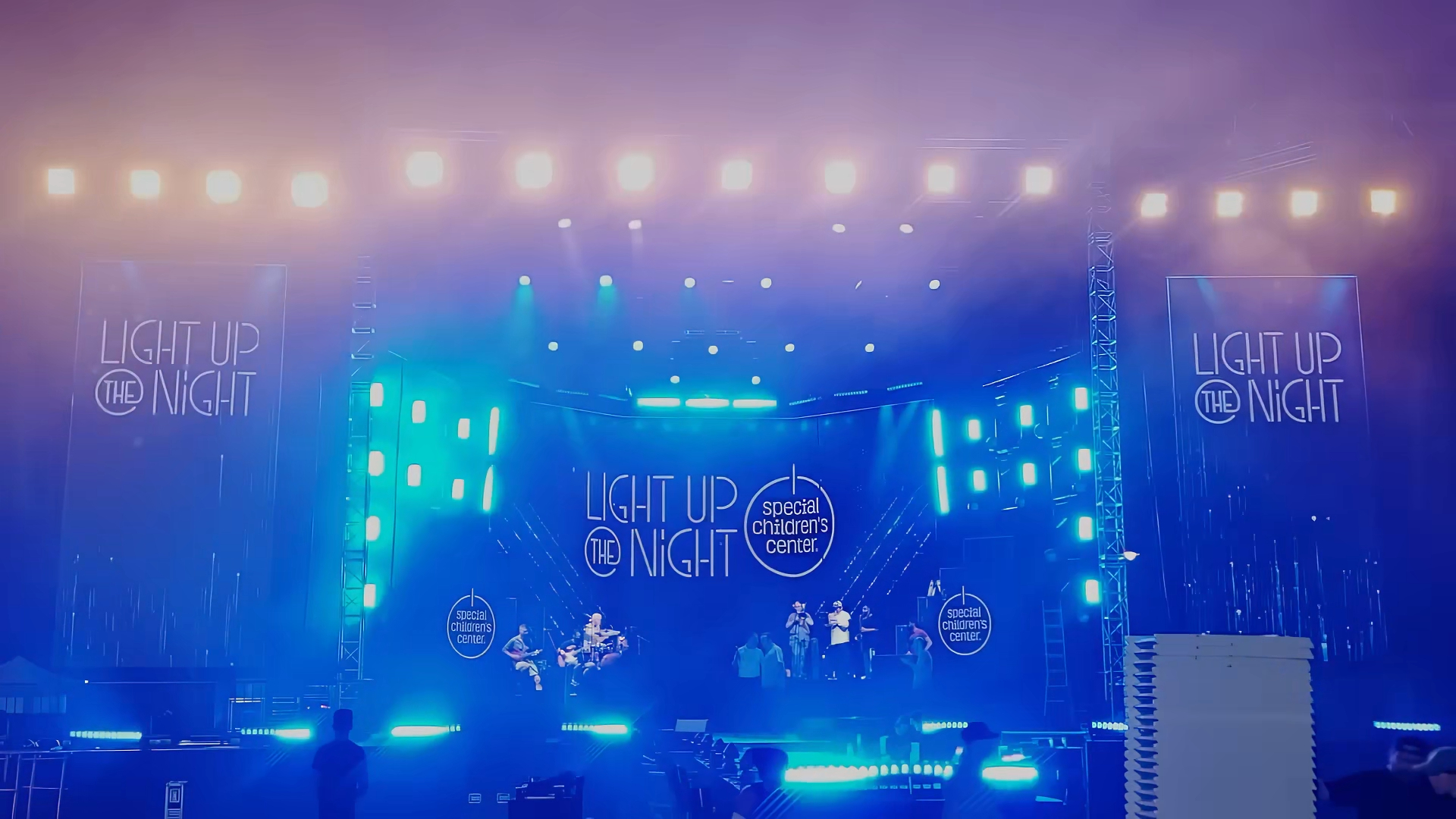
The arithmetic of modern multi-stage festival lighting is staggering. A major international festival running four simultaneous performance stages, a DJ tent, an immersive art installation zone, and a late-night venue might deploy over 3,000 intelligent fixtures across the entire site — moving heads, LED battens, laser systems, pixel-mapped surfaces, atmospheric hazers, and practical set-piece lighting — all requiring real-time coordination from a handful of operators. That this coordination happens at all, let alone with the creative precision that audiences expect from headline festival productions, is almost entirely attributable to the architecture of the MA Lighting grandMA3 platform.
Universe Capacity: The Number That Defines Scale
The fundamental unit of DMX lighting control is the universe — a data stream carrying 512 channels of parameter information. A single intelligent moving head fixture might consume 30-60 DMX channels, meaning a universe can address only 8-17 moving heads at full parameter resolution. Scale this to 3,000 fixtures and the universe count climbs to 200+ — a number that would have been operationally unmanageable on the grandMA2’s 250-universe limit but is well within the grandMA3’s 1,024-universe capacity when expanded with external MA Lighting xNode processing units.
This universe capacity is not theoretical overhead — it is actively utilised in the largest festival deployments. The Tomorrowland Winter festival in Alpe d’Huez, France, deployed a grandMA3 network handling 820 universes across six performance environments in 2023. The ability to address every fixture on site from a unified show file — shared across eight grandMA3 console surfaces operated by different LDs and operators — allowed the festival’s head of lighting to maintain brand consistency across all stages while granting individual operators creative autonomy within their stage remit.
Network Architecture: How Multiple Consoles Share a Show
The grandMA3’s multi-user network architecture is built on the MA-Net3 protocol — a UDP-based high-bandwidth networking system that distributes show data across an Ethernet backbone with microsecond update rates. Unlike legacy protocols that elect a single ‘master’ console and route all changes through it, MA-Net3 operates as a peer-to-peer mesh where every connected surface maintains a synchronised copy of the show file and can make changes that propagate immediately to all other nodes.
In practical festival deployment, this means the main stage LD at FOH, the LD working the second stage from a monitor position, and the production manager reviewing show files in the production office are all working with identical, real-time-synchronised show data. If the main stage LD updates a fixture group or revises a colour palette that’s shared across stages, the change propagates immediately. This collaborative workflow — which MA Lighting calls multi-user operation — has fundamentally changed how large-scale festival productions are programmed and operated.
Fixture Library and Patch Management at Scale
Managing 3,000+ fixtures in a single show file requires a patch management discipline that the grandMA3 supports through its comprehensive fixture library — containing profiles for over 60,000 fixtures from every major manufacturer. When a festival production mix includes Robe Megapointe, Martin MAC Ultra Wash, Claypaky Axcor 900 Spot, GLP impression X4 Bar, and Elation Protron fixtures across multiple stages, the grandMA3’s ability to import manufacturer-certified profiles ensures that attribute parameters — particularly colour mixing and beam geometry — behave consistently and predictably in programming.
The grandMA3’s fixture creator module allows experienced programmers to build custom profiles for new or unusual fixtures that aren’t in the library — a necessity in an industry where new hardware launches continuously. Production programmer Matthew Cater, whose resume includes Robbie Williams residency productions and U2’s 360 Tour derivatives, has described the grandMA3’s fixture creator as the most sophisticated tool of its type available, enabling the definition of complex attribute relationships — where changing one parameter automatically constrains another — that would otherwise require extensive manual programming workarounds.
Timecode Integration and Automated Playback
For 3,000-fixture shows that include pyrotechnic integration, automated set movements, and broadcast camera triggers that must be timed to musical cues with millisecond precision, the grandMA3’s timecode engine is the operational backbone. The console can receive SMPTE LTC, MTC (MIDI Timecode), and internal clock references simultaneously, with the ability to switch between sources mid-show without interrupting playback — critical when a live broadcast feed drops its timecode reference and the console must fall back to an internal clock without the audience or camera operators noticing.
Production timecode programming at the 3,000-fixture scale involves layering automated cuelists that handle background environmental states — audience lighting, stage wash states, hazer output levels — with foreground performance cuelists that a live operator triggers manually against the musical performance. This hybrid manual-timecode approach gives operators the ability to respond to unrehearsed performance moments — an artist extending a song, a crowd moment that deserves extended support — while the automated elements handle the complexity of simultaneously managing 3,000 channels.
The Programming Ecosystem: Beyond the Console
The grandMA3 doesn’t exist in isolation. It is the conductor of an ecosystem that includes MA Lighting’s MA 3D visualisation software, the grandMA3 onPC software for offline programming, and third-party integration with Vectorworks Spotlight for CAD-based rig planning and Capture for realtime 3D visualisation. The combination of these tools allows a production team to fully programme a 3,000-fixture show in an offline virtual environment weeks before the physical rig exists — testing cuelists, checking coverage, and resolving fixture conflicts before load-in. By the time the rig is hung and cabled, the show file is essentially finished. The grandMA3’s dominance in multi-stage production is not an accident of market position — it is the outcome of building the only platform that makes 3,000-fixture coordination operationally manageable.
