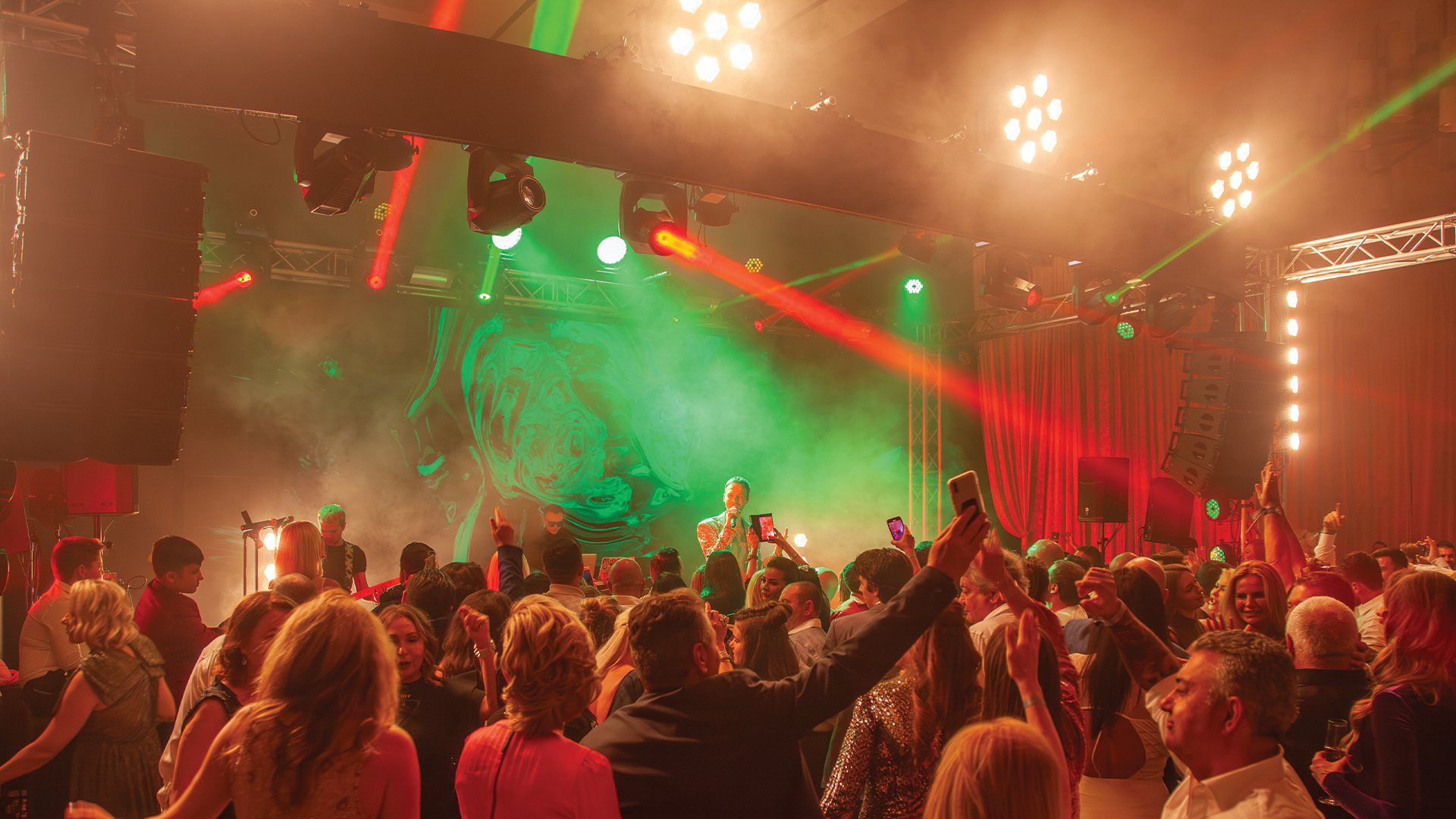
A single-night concert and a multi-day concert series are not the same production challenge in lighting. The difference is not merely scale — it is the accumulation of programming variables that multiply with each additional day: set list variations between nights, guest artist appearances with unique lighting requirements, technical issues from the previous night that require show file modifications, audience differentiation between night-one attendees and those returning for night three, and the physical fatigue of lighting crews executing complex shows for consecutive days. The MA Lighting grandMA3 platform has become the command center for managing this complexity across more than 1,000 multi-day concert series globally, and the programming techniques that experienced lighting directors and programmers have developed for sustained multi-night runs represent some of the most sophisticated show file architecture in live production.
The multi-day concert series as a format has deep roots. The Rolling Stones’ residencies at major venues through the 1970s and 1980s were early examples of productions designed to run for multiple nights while evolving between performances. The transition from purely manual memory dimmer systems to computer-controlled lighting consoles through the 1980s and 1990s — first with products like the Strand MX and Celco Gold and later the Whole Hog II from High End Systems — made multi-night shows progressively more programmable and the evolution between nights more achievable. The grandMA2 and grandMA3 have carried this evolution to its current peak, offering show file architectures capable of sustaining 100+ unique performance nights without revision overhead becoming unmanageable.
Show File Architecture for Multi-Night Runs
The foundation of successful multi-night grandMA3 programming is a show file architecture built for modification from the outset. Experienced programmers build show files for extended runs using modular sequence structures where each song or section exists as a self-contained cue list with its own macros, executors, and fixture groupings — rather than a monolithic sequence that must be navigated linearly. This modularity allows the LD to add, remove, reorder, or modify individual song sequences between nights without disturbing the rest of the show file, supporting the set list changes that artists on multi-night runs routinely introduce to prevent repetition.
The grandMA3’s clone function — which allows an existing sequence to be duplicated with all its content and then independently modified — is central to the night-to-night evolution workflow. A programmer building a residency might establish a primary show file for Night One, then create Night Two as a cloned variant where specific songs have been re-programmed for a different look while the majority of the show carries forward unchanged. The MA show file management system allows these variants to be saved and recalled independently, providing a documented history of each night’s show file that can be invaluable when a specific look from three nights ago is requested for the final performance.
Fixture Count Management Across Extended Runs
Multi-day concert series — particularly residencies at large venues — frequently involve fixture additions and substitutions that do not occur on single-night productions. A lighting designer might add 50 additional Robe BMFL Blades for a special final-night production element that was not part of the original design, or substitute GLP JDC1 strobes for Ayrton Ghibli beams in a section when the primary fixtures have a maintenance issue. The grandMA3’s fixture patching workflow — which separates the fixture type definition from the physical patch address — allows substitutions to be executed rapidly with minimal programming impact, because the show file references fixture types and selection groups rather than individual DMX addresses.
For a residency deploying 600+ fixtures at a venue like Madison Square Garden, The O2, or Kia Forum, the grandMA3’s universe expansion capability — supporting up to 250 universes in a fully expanded system — provides the overhead necessary to add fixtures without restructuring the existing universe layout. Production companies like Bandit Lites, PRG, and Upstaging maintain pre-patched grandMA3 show file templates for each major venue in their roster, giving the incoming LD a starting point that already accounts for the venue’s permanent lighting infrastructure and establishes the fixture numbering conventions that their crew is familiar with.
Timecode Integration and Musical Precision
The transition from manually-timed cue execution to SMPTE timecode and MIDI Clock integration has been transformative for multi-night concert programming. Productions running timecoded sections — where specific cue triggers are locked to specific moments in recorded audio or video playback — achieve a precision and repeatability across multiple nights that manual timing cannot approach. The grandMA3’s timecode implementation supports both LTC (Linear Timecode) and MTC (MIDI Timecode) inputs simultaneously, and its timecode learn function allows a programmer to record a live performance’s manual timing and convert it to timecode references — capturing the LD’s intuitive timing from a first run and encoding it for precise repetition across subsequent nights.
For a 1,000-show multi-day concert series, the grandMA3 platform is not merely a tool — it is the institutional memory of the production. The show file accumulates the creative decisions, technical workarounds, and performance refinements of hundreds of nights and multiple programming teams, becoming a document of the production’s evolution as much as its technical infrastructure. Understanding how to build, maintain, and evolve that document is the defining skill of the elite touring lighting programmer in the modern era of professional live production.
Training and Certification: Building the Talent Pipeline
The demand for grandMA3-certified programmers capable of handling extended multi-night runs has driven substantial investment in training infrastructure. MA Lighting’s Training Partner network — operating training centers in Germany, the UK, the USA, and China — offers certification programs ranging from introductory grandMA3 operator courses to advanced programming intensives specifically addressing multi-universe, multi-console, and multi-night workflow management. The PLASA Education Foundation and IATSE training programs in North America have incorporated grandMA3 curriculum as core content, reflecting the console’s status as the industry standard that new entrants to the touring lighting profession must master before they can realistically seek work on major productions.
