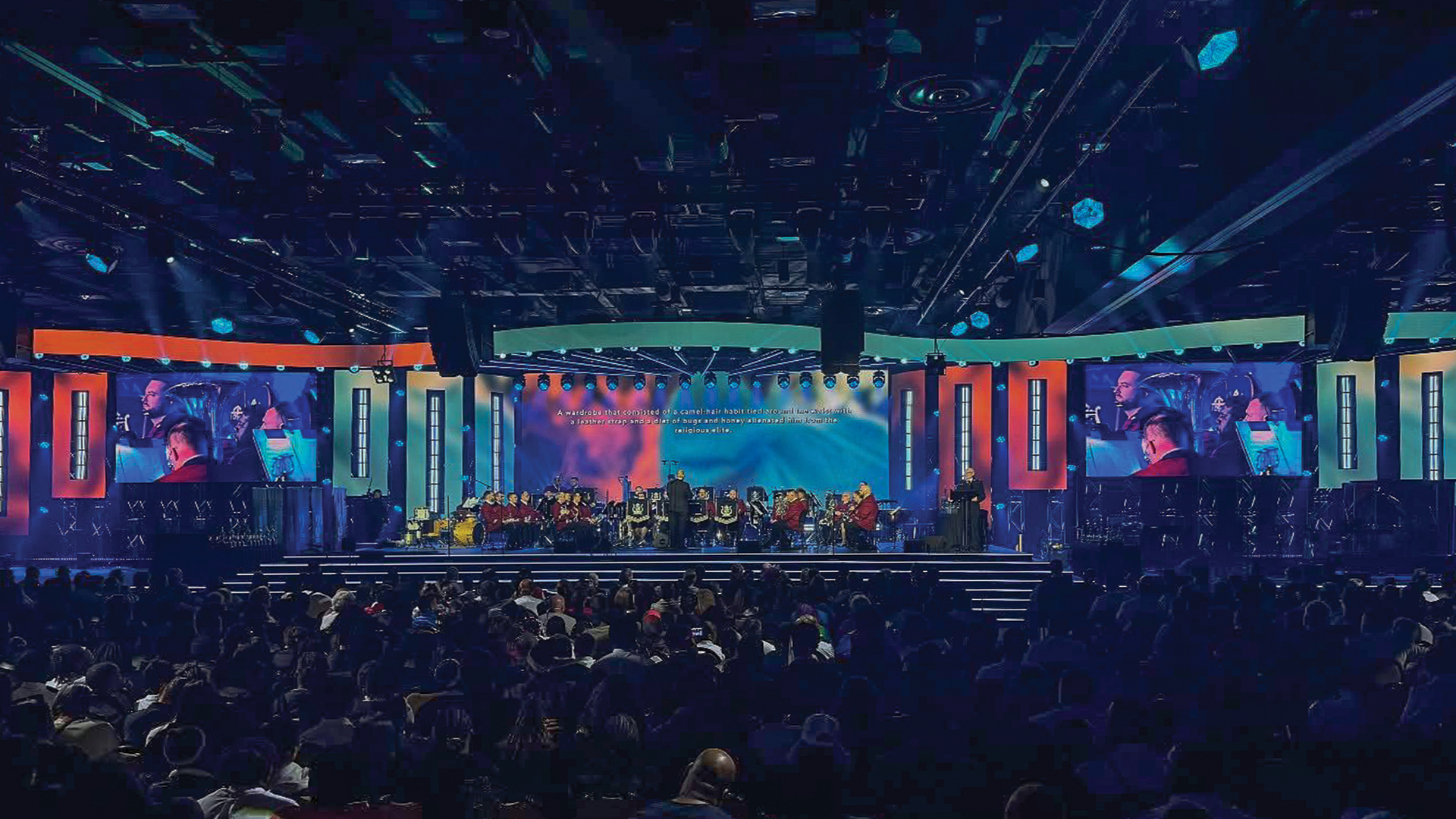
Designing an LED video wall system that serves simultaneous live audiences across 50+ countries with real-time streaming — each country with different broadcast standards, CDN infrastructure, latency profiles, and color rendering expectations — is a problem that didn’t meaningfully exist before 2020. The pandemic’s forced experimentation with hybrid event production collapsed a five-year technology adoption curve into 18 months, and the LED wall systems that emerged from that accelerated evolution are fundamentally different animals from their pre-pandemic equivalents: not just brighter and sharper, but architecturally designed for multi-destination, multi-standard real-time output delivery.
The 50-Country Problem: Standards and Latency
Streaming to 50+ countries simultaneously through platforms like YouTube Live, Twitch, Vimeo Premium, and proprietary event platforms requires navigating infrastructure challenges that begin at the LED wall and extend through the entire video production signal chain. Different regions operate on different broadcast frame rate standards — 24/30/60fps in North America and Japan, 25/50fps in PAL regions — and CDN infrastructure in developing markets may impose bandwidth constraints that require adaptive bitrate streaming profiles with dramatically different resolution specifications than premium bandwidth markets support.
The LED wall itself must perform identically regardless of which downstream path its output feeds. This sounds obvious but creates practical constraints: a Brompton Technology Tessera SX40 LED processor running at the 3,840Hz refresh rate required for broadcast-quality camera capture also needs to manage HDR metadata for platforms supporting HDR10 or Dolby Vision streams while delivering standard dynamic range output for conventional capture chains used in markets without HDR infrastructure. The signal chain from LED processor to broadcast encoder to CDN must accommodate both simultaneously.
Content Adaptation for Global Audiences
The content itself must adapt in real time to serving radically different viewing contexts. An online viewer in Seoul watching on a Samsung QLED 85-inch display in a quiet apartment experiences the visual content entirely differently from a live audience member in a London arena with ambient lighting, crowd distraction, and physical distance from the LED surface. Disguise (d3) media server systems used in hybrid productions manage these dual contexts through separate output paths: the “live path” with the full dynamic range, pixel-mapped, show-dependent content for the physical LED wall, and the “broadcast path” with gamma-corrected, broadcast-normalized content for streaming.
The Disguise RenderStream protocol enables Unreal Engine 5 or Notch real-time effect engines to generate content that adapts parametrically to live inputs — performer position data from motion capture systems like OptiTrack or Vicon, audio analysis from the mix console, or simple MIDI triggers from the lighting console. For a 50-country streaming event, this means the same generative visual system that responds to the performer on stage in real time also generates the broadcast-quality content stream, ensuring that what online audiences see isn’t a camera capture of a live show but a purpose-designed visual experience for their viewing context.
Technical Specifications for Global Broadcast-Quality LED
The specification checklist for an LED wall system designed for hybrid streaming to 50+ countries has evolved significantly since the early pandemic-era streaming experiments. Minimum requirements now include: pixel pitch of 2.6mm or finer for close-camera-distance applications (ROE Visual CB5 MK2 or Unilumin UMESH II 2.6), 16-bit grayscale processing for smooth gradient reproduction, refresh rate exceeding 3,840Hz for camera compatibility, and PLUGE calibration to Rec. 709 or Rec. 2020 color space standards using a hardware calibration reference like the Murideo SIX-G generator.
Beyond hardware specification, network infrastructure for 50-country simultaneous streaming requires dedicated internet uplinks with quality-of-service prioritization for video streams, redundant CDN delivery through at least two independent providers, and real-time monitoring of per-region stream health through platforms like Mux Data or Conviva that provide audience-side quality metrics. The combination of broadcast-grade LED hardware and professional streaming infrastructure is what transforms a local live event into a global content experience reaching audiences in 50+ countries simultaneously.
